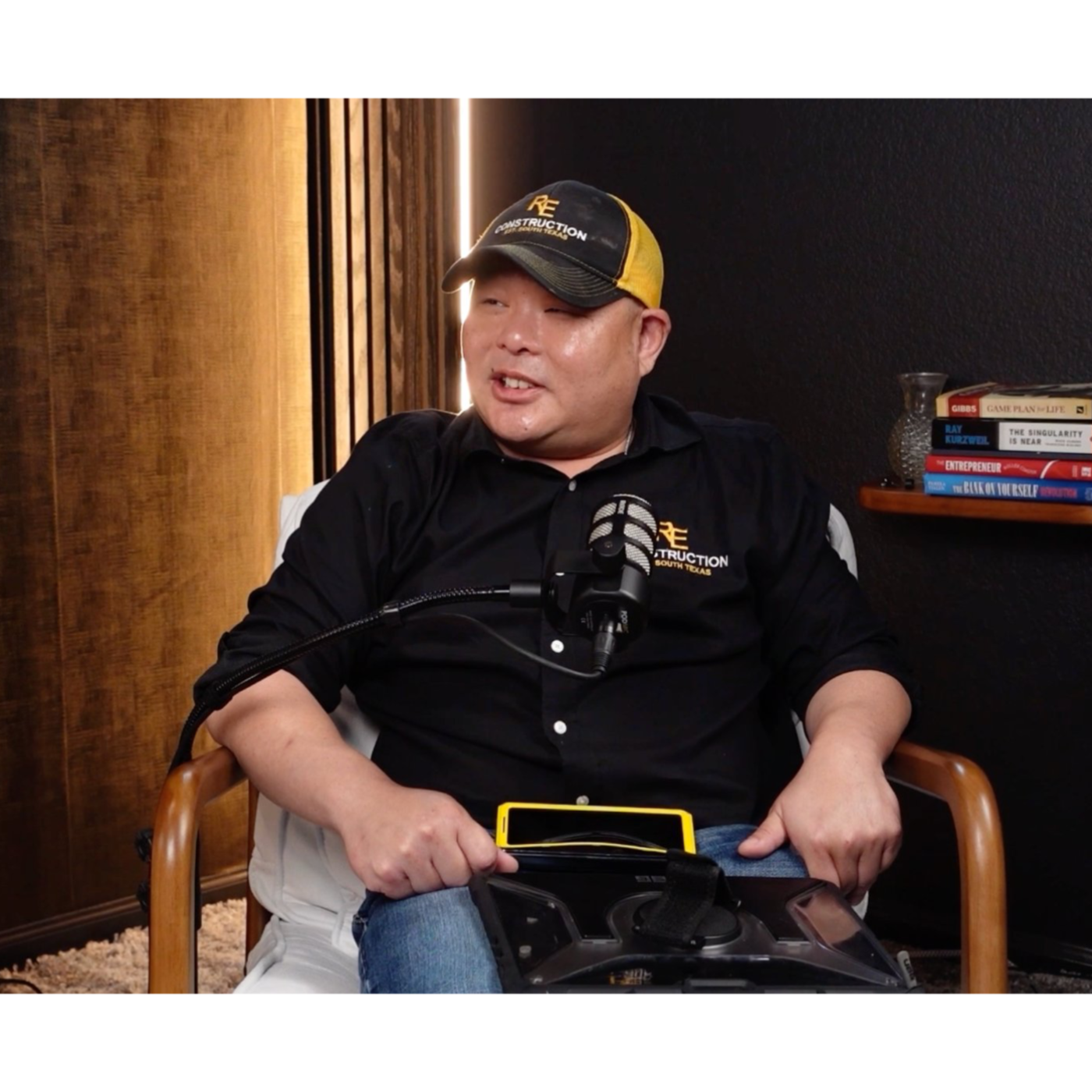
Where to find Travis Louie
Founder, RE Construction (San Antonio)
Show notes
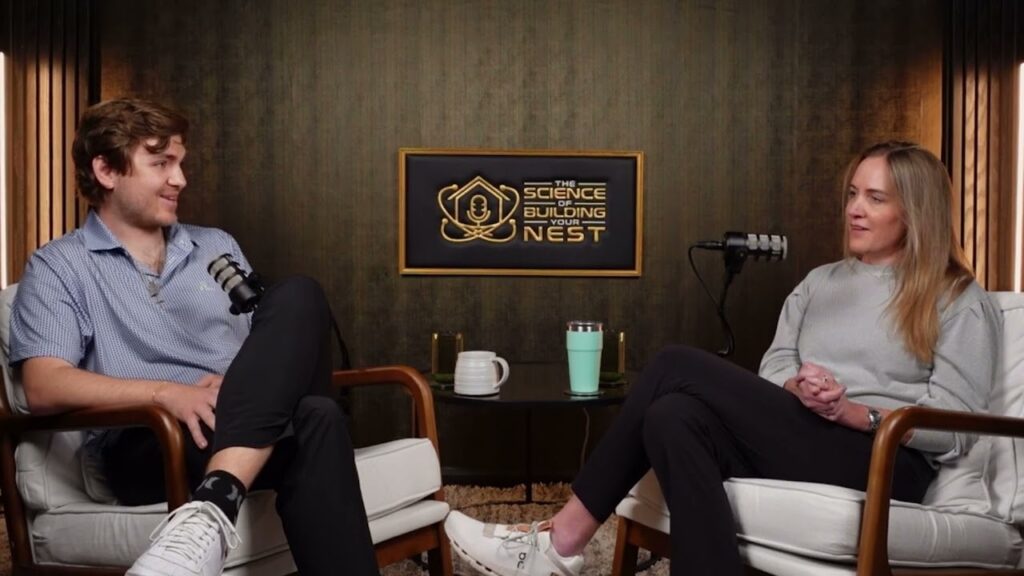
In this episode, we sit down with Travis, founder of RE Construction and a seasoned professional in the San Antonio building scene since 2009. From land development to real estate rehabs, Travis brings a deep, hands-on understanding of construction, remodeling, and everything in between.
We explore the evolving landscape of construction in San Antonio, how Travis has successfully adapted his projects over the years, and the systems he’s built to maintain both quality and customer service. He shares insights on city permitting, contractor collaboration, and what it takes to deliver honest, high-quality work in a competitive market - all while creating a positive and growth-oriented environment for his crews.
If you’re interested in the real-world side of contracting and what it means to lead with values in construction, this episode is for you.
Key moments
- Meet Travis Louie of RE Construction
- From house flips to builder warranty work
- Cash flow and paying crews every Friday
- Managing client expectations and budgets
- Pulling permits and San Antonio's strike team
- Pain threshold and owning your mistakes
- Lessons from a family pet store business
- What hunting and conservation teach about growth
- SIPs, container homes and the future of building
The mailing list
Get the next conversation in your inbox.
One short email when a new episode drops, plus practical tips on healthy homes and building things that last. No spam.
Transcript
Travis Louie with RE Construction. How are you today? Doing well. Thank you. Thank you for having me. How are you? Good, good. Thanks for joining us. We'll get right into it. And if you can just tell us a little bit about yourself and about about your business. Sure. So we started a company back in 2014. I named it Real Estate Chasers LLC. Specifically, it pertained to what we did back in the day. So you got to remember back in 2014, we were pretty much at a climax as you couldn't really turn the radio on or for that matter listen to a podcast about flipping a house or you know turning on a tv and not seeing a commercial about learning how to use other people's money to build a net worth to fix and flip and to live a lifestyle of luxury so we were we were
at the part of it our job was to go out knock on doors identify properties working through realtors what they called wholesalers back then including again just knocking on doors identify a good property Identify what the scope is, meaning what is it going to take to actually put that house on the market? Once that was done, we were going out and finding crews. Finding crews to actually, everything from foundation, all your M &Ps, mechanical, electrical, plumbing, foundation, roof, everything, sheetrock, paint, put that all in a pretty little package, find the investors for it, gap that what they call the fund. and put the house on the market, and then we would get paid at the end. At one particular point, I would say between 2000, I would say it was the summer of 2014 leading into the beginning
of 2015, we were running anywhere between 10 and 15, takes and flips at that particular time. Some of them would range from easy five to $10,000. We're going in there just doing flooring, paint, sheet rock work, and putting it on the market. Quick, easy. Others, we had to do additions. We had to do six to 900 square foot additions to houses to add value to hit what they call an ARV. And I'm pretty sure that it's a term that's been used repeatedly. So your appraised or resale value of that property was based off of what you put into it, obviously, and everybody was doing it. About 2017, 2018, properties were really hard to find. They most hard money lenders would look for what they call the seventy percent
ltv. Which means they would only loan on a certain amount of your rehab and the property itself. And so because everybody was jumping to the game they were really raising the values of what these properties were for an example on the south side of town i remember there is a shack that we bought right in the middle right next to a highway for fifty thousand dollars right fifty thousand dollars and i'm thinking that it's a. That's a lot of money. Back in the day. What's the $50,000 for? I mean, I'm looking for buried treasure as we're digging up the foundation. Like, what am I missing here? You know, you fast forward to where we're at right now in that same neighborhood, because it has been gentrified and they have new builds there. That one piece of property is now worth over $195,000, just the lot itself. So you can't
really make that money anymore. You know what I mean? So about 2017 that flip started slowing down a little bit because we really didn't want to get into projects That we couldn't deliver not saying every single one of them was perfect Right a lot of them sure we did end up losing money some of them breaking even But what made it up was the home runs that you actually hit and that's why you kept that's why you kept going 2017, we started slowing down, but we were approached by a builder out in Austin. They said, hey, Travis, we need some crews up here to do some warranty work for us, i.e. flooring repair, sheet rock repair, paint. If a house flooded, they would give us a call and say, what do we do? So we were able to actually start working with them.
At a particular time frame, 2017, 2018, we went from Having two crews up to five crews and we were doing this between Austin and San Antonio We started expanding our markets and in 2019 We were working in Houston as well We had between three and four different builders that we were actually working for again between San Antonio Austin and Houston To fast forward to today Over the past three or four years given our economic climate That's shut down a little bit Builders, I wouldn't say they stopped building, but I know that they still had a lot of inventory that was on the market that they needed to get rid of first before they can continue building. Now, of course, again, where we're at right now, you've
got inflated material prices. Our demand is still going up, but we still have the inventory for it. I think within the next year, and I'm no expert, but I would think that the next year, year and a half, you're going to see it turn back around to where we were before. And that was basically the start of it we're trying to diversify more out towards you know right now we're working on a new bill we're about to finish it up it's a little nine hundred square foot casita we've got bids out on building barn dominions so we're. We're diversifying in that arena. But to me, what we're showcasing and what we're doing is we're showing the ability to kind of adapt, but more importantly, create our own demand.
So what we did as a company as well as I opened up another company called Antares. I named it after my two newborn nieces and my grandson and Tatiana and Ezra. It's specifically meant for new builds our first projects walking into 2025 Hopefully it's gonna be building duplexes. They're gonna be spec homes. They're gonna be infield developments That's really what we want to do We've been approached and we've tried container home building modular home building Boxable homes building being put up it as an infield development in the middle of a city kind of where you want to be The city kind of makes it a little bit tougher that I'm talking inspections How they're
building their plan development what they're gonna actually allow within a city or within a block or within an area Once you start getting outside like spring branch areas dripping springs. It becomes a little bit less but that market becomes so Hard to build out there because there's no infrastructure that your your probability Of controlling the probability becomes a little bit harder And that's why we really are sticking with the infield developments with Ontades backed up by REC since we've been open since 2014. You know, I'm proud to say that under our flag, we do have a B1 residential builder license under our encampment. I can tell you that the IRC has made it difficult over the past year, year and
a half, two years to where anybody could step in the state of Texas and apply for a general contractor's license and you're a general contractor as long as you showed good insurance and you showed that you were the company that you said you were. Here they actually forced you or the license holder to take a test. What that does for us as a company, and I hate to say it like this, but it does, it roots out a lot of the competition. However, our market is still worried to that right now. It needs to cure. So REC has a... a great future in front of it, specifically on where we're at in our time frame, because I know that we're going to go through another turn. And I think things for construction is going to come back up. I think that you're going to see the fix and flip market come back up. I mean, I'm starting to hear it on the ground.
More people are starting to find, yeah, I found this great deal. I'm going to flip it. Go God. Good luck with all that. But you're starting to hear it more and more and more. So. Really the game for us is to create enough diversification To keep us alive if one nest doesn't end up working out including working with the builders or the remodels because there's so much Competition out there, you know you hear They get there they're getting it done cheaper Travis you guys are so expensive, but I know I can get it done I have more of a probable outcome with the budget that I set up. With the influx of work or lack thereof
work, you've got a cheaper mentality of guys that used to for instance, guys that used to work for $350 a day and demanded $350 a day. Now they're working for $200 a day because there's not enough work. out there, they're out there competing and that's what's kind of killing our market. Thus going into the new builds, we're creating our own demand. I keep on going back to that because that is more of a circular force, a circular installation for both of our companies, but we've been, that's what we've been dealing with in a nutshell. Well, that's, that's great. And you've, you've been able to take. you know, each section of your business and be able to diversify. I don't think many people would be able to take a skillset from one area and find and develop a process for another. So kudos to
you on that. And you talk about the general contractors that are out there. And I know from my own friends, there have been horror stories from, you know, like you said, a general contractor can be anyone who comes into the state and wants to build a house. All they need to do is really get insurance. They need to have insurance so that if they burn down a house, at least they're covered from that standpoint, but there's no workmanship quality test or anything like that. So by, by getting that, that, you know, differentiation, you are, are, are able to market yourself as a different contractor. Speak a little bit about that, you know, your, your process and your workflow compared to some of the others that you've seen, because I think every industry deals with this issue, especially the good contractor versus, you know,
poorer contractor, um, and, and the actual quality that you're putting into your work and what the homeowner is getting at the end of the day. You know, I think, I think a lot of it has to do and it sounds kind of backwards, but it really depends on the contractors purse strings as well. Let me explain because you can't really expect for a client just to pop up and just Give you a hundred thousand dollars right out the gate to do it. No, they're gonna budget it They're gonna they're gonna hold you back that they're gonna require a payment schedule without that payment schedule You're you're kind of lost in the wind. You've got to look to see where your funds are being appropriated Most importantly, where's the money from the client? And how is it funding my guys because you have to keep in
mind that? 99.9 % of the subcontractors that we use or the contractors that we use they want to get paid every Friday Come hell or high water, right? One of the biggest thing in our industry is once you find a good sub and you want to keep them around you better keep them around. If he can do it for you, you do it. You pay him every Friday. You pay him well. Of course you, you know, gotta be balanced in what you give him and what you take from him. But you want to pay him extremely well. The client really doesn't care about that. If you have a restroom that needs to be done, the only thing that you care about is, Travis, I need this done in three weeks, four weeks. You don't care that my guys need to get paid. On Friday, but you're not going to give me money unless let's say 50 % of it's done Well, I still got to pay my guy every Friday.
So unless I actually have extra funds to do it I'm not gonna move forward with it point in case and this is kind of hurt us a little bit too You know, I'm not naming any names on builders, but builders they have a 30 what they what they call a 30-day net Okay, which means that if I do work for a builder today and I invoice today I'm probably not going to see it for 30 days. I'm not going to see that money, but I had to pay my workers, you know, and your materials and materials and everything to get paid because of where we're at. Again, I keep on going back to our environment, our economic environment. Now, sometimes it's taken 60 to 90 days to get paid at one particular point, uh, three or four years ago. REC was now this is accounts receivables over $550,000 that was owed to us. Right between
all these builders because of what was happening and that that really did sink us the fact that we That we were able to endure that now we had to cut crews. We had to we had to cut crews We had we had to cut ways of how we were marketing and that was there are our biggest deal Yeah, it just it was killed but I go back to What kept us Along this far I would believe and knock on wood It was a fact that we were able to budget money But we were able to save money our own account to where I'm not robbing Peter to pay Paul and that's way Those contractors are running up against because once that homeowner says I'm not paying you this Thursday for Friday You're gonna have to finish this up They're gone I'll get to you when I can get to you, meaning I'll
come back tomorrow, but they don't show up till the following Wednesday or Thursdays because they had to cover their payroll by finishing other jobs with clients that are willing to pay. So a lot of those stories you're going to hear. Yeah, it's unfortunate, right? I mean, not only for the homeowner's perspective for sure, but for the contractor, they started out just as gung-ho as anyone else did to do a great job. But you do find these pitfalls. And if you aren't able to set up your business in the right way and if you're not able to develop those processes, the proper timeline of payment for each client, you do end up having to sell some jobs to then pay off the current job because you know that payment's coming and then you'd run into more issues. I mean, it is a cyclical business. It
absolutely is. But having that money and being properly budgeted is one thing. The other thing is managing expectations for clients. And that's another big thing that kills people is you can walk into a kitchen and just say, you want the flooring done. And you can say, you know what? I expect the flooring to look like a million dollar kitchen. But you're only using 99 cent square foot LVT. The problem is it's not going to look like that, but your contractor that really wants the job is going to sell you. It's going to look immaculate. Call town and country right now after we're done. Cause you're going to get that thing. And guess what? I'm going to get it done in three days. That's it's not, I mean, it doesn't make sense. If you're promising under
delivery, that's correct. And then what hurts even more is once they don't deliver that expectation. Now as a client, you're going to say, dude, I'm not paying you. I'm not paying you anything for that. When are you going to fix it? And that's where that circle starts happening. And that's where you start finding other people saying, you know what? I'm going to find another contractor. If you can't do it, I'm going to find somebody else. And that's where clients start losing more money because now they're They're almost doubling down on starting off the process. And they want to keep you to a tighter schedule because they've been burned in the past. That's correct, too. Yeah, I think that's a that's a great thing to touch on because in every business we have to do that. Right. Correct. And unfortunately, you're going to lose some business because someone else goes in there and they over promise. Right. And they, you know, you're you're looking at their numbers saying, you know, if if that's if that's too good to be true, you know, watch out for
it. Mrs. Homeowner, because. it ends up being too good to be true. And you've, you've at least been in the business long enough to realize when it is over promised and they probably are going to under deliver. And unfortunately I can't meet their price because that's just unrealistic. You know, it's, it again, it sounds asinine. Uh, my approach is sometimes I'll feel better that I didn't get a job. specifically because I wouldn't cut my prices by 2,000 bucks or 3,000 bucks, but that gave me an idea of what type of client that was gonna be and what they were expecting. And so at the end of the day, I felt better signing off by saying, I'm here if you need me. If this goes wrong, give me a call. I'm always gonna be able to hear to help you whether you use this or not. But that's the whole deal. So you've got to be able to manage
the expectations, but more importantly, set forth a good budget. and not really cut corners and it's almost cliche because every good contractor out there is gonna tell you that. Following it and actually putting it into practice day after day is another issue, especially when you're dealing with multiple trades, when you're dealing with multiple contractors, because you have to keep them all on the same side and all on the same page, especially when you're going through a process. One trade could hold back a project two or three months because of Lack of budgeting or lack of planning or lack of oopses Yeah, and being able to manage each individual contractor separately, you have to be knowledgeable, very
knowledgeable about each individual trade that you have on site to these jobs so that you can manage not only the customer's expectation, but then also manage that crew. Because, you know, in general, when you're hiring subcontractors, they might send a manager there or they might not. And so you now become the pseudo manager with a crew that, you know, you're, you're trusting and you've, you've probably paid for upfront for materials and for. certain amount of labor and now it's getting them to show up every day. It's getting them to finish off the job while still managing the customer's expectations. I think that's great and our philosophy was sent was to put the contractors first and I still have that mentality. Put that subcontractor first. I think that's what got us this far because there are crews that started working with me back in
2014 on other people's projects that are still with me today, working on other people's projects. It's because I paid them every Friday, whether it hurt me or not, whether it took money from my bank account or not, they got paid every Friday. And that's you got to keep that because you got to be able to have a Johnny on the spot or at least have somebody that you can count on when something happens. Hey, I really need this thing painted today. And that's going to come back if you have a problem with their work. That's correct. Right. Because they see the value of you and they want to work for you specifically. And so they are more willing to bend over backwards to make sure that you're happy at the end of
the day, to make sure the customer is happy and to make sure that they get another job from you. Um, there's been many times that, you know, we've, we've dealt with people that they They messed up the first time, but they came back a second and third time to make sure that everything was done the right way. But like you said, someone who shows up on time, someone that's able to do the quality work that, um, at the end of the day you expect because your, your clients also expected, um, they are invaluable. And then some of the things that I see contractors do on a day-to-day basis, it, it blows my mind because it's more, it's, it's a craft. It's a, it's a trade and it's an, it's an art piece at the end of the day. Um, the fact that, you know, someone's able to take a, an idea and create. it into a product is something that, you know, in my mind, you know, as an HVAC guy, we're getting it from the manufacturer and we're having to manufacture that system inside of an environment. And that
is a piece of art. I guess I look at it differently. Um, but you know, when you, when you talk about the, the carpentry and, you know, the, the cabinets inside of a kitchen, those can be works of arts. They can be, they can be the, I mean, they're, they're your signatures. if you think about it for builders, but it all comes down to discount on this one. I've got another project that's coming down the road. We've got to keep our prices competitive. And that's how you do it. You do it within, meaning you do it within the tools that you already have, just treat them well. And the relationships you've created. Yeah. Sometimes a little bit too close, too close. But from a, from a distribution channel, I know from my distributors, they want to work with me because I've developed that relationship over and over again. And when
I do tell them about the project that's coming up, I'm sure they get that a lot from X, Y, and Z contractors. But since I've been able to, you know, bring them bigger jobs or, um, you know, bigger orders from a job that I have in the near future, they're able to trust me and they're able to bring it. equipment sooner for me, they're able to, you know, bring in more equipment at a larger discount for them, which obviously is past to me. Sure. Absolutely. Um, you know, one thing, one thing to really realize too, for, for general contractors, and this is really for clients of yours as well is you need a contractor that understands the parameters of his own knowledge and what he's using certain uh, aspects for, let me give you an example. Like for instance,
and I think, um, at one particular point, we might, we might've actually worked on one of them to where the damage was so bad that it, it started deteriorating LVLs or actual structural walls. And so it was a simple LVL that needed to be replaced, but I'm not touching that unless I actually have an engineer. and that adds cost. Yes, it was one 10 foot LVL, but I'm gonna need an engineer to come look at it and tell me exactly what I need to do to it. Furthermore, before I cover it up with sheetrock, he needs to come and look at it and say, I'm blessed, it's good. Why? Because it's CYA. I'm not an engineer. I
mean, I can look at it and say, yeah, it looks good. It looks good, but. I don't have that stamp that says, yeah, it is correct. More importantly, it looks good from your house. Yeah, exactly. So you got to look into stuff like that. Is your contractor aware of that? What are their limitations? Cause you're absolutely right. I think the relationships that you create are, Hey, I know a guy for this. And when you have developed that, that circle of trust between the contractors that you've used on an everyday basis, they know they want to show up to your job because most of the time it's something that is within their scope of work. And now you can now learn from them and be able to educate homeowners on why you need to bring in this next person. Because I do know the limitations and I don't want to put, I don't
want to put your safety at risk. And that's the whole deal. I took it. I tell my clients that all the time, because they're like, do you really need an engineer? It's like, yeah, I'd like to be able to sleep at night. I really do. I want to sleep at night. And the last thing that I need looming over my head is, oh my God, I hope that one doesn't lose. It looks good. The paint job was spectacular. Because you know that you can do the work. That's correct. You want to be able to ensure that it's. properly done from an engineering standpoint. And maybe engineer is just one person out there that you would bring in. I think that's one of the most important because there definitely are contractors out there that just decide to save a thousand bucks for the client or be able to mark up a thousand bucks because they're not using it. It's like that depending on certain areas as well. But
that's the deal is we turn down a lot of business because we are going to pull permits. I mean, that's just the deal. I mean, San Antonio, that's kind of what had us thrive for a little bit, too. There was a small niche that we were working with. There was a hard money lender. I can't say their name, but there was a hard money lender. And what would happen is we would have investors come in there, buy a piece of property, totally wrong, walk in and say, yeah, this is only a $20,000 rehab. It ends up being a 50 or $60,000 rehab because it needs structural stuff. they had to default because they couldn't get it past, you know, certain inspections. I want to say probably, and I'm maybe predating it a
little bit, I would say about 2011, 2012, the city of San Antonio came up with what was called the strike team. The strike team's sole purpose was to go out, find Projects that were going on remodeled projects because of the height of fix and flips that were going on and see if they were doing it correctly or not so for instance it and there's rumors of this and I but I feel it because I've seen it is For this one particular company. They had several and several inspectors during the weekend They would drive through a neighborhood. They weighed see it for sale sign in front of the house They would look it up They would look up the listing and the listing will
say, remodeled from top to bottom, addition this, this, you know, it was extravagant. The inspector's looking, okay, hops back into his vehicle. He sees if there's any permits. Nope, no permits. No, nothing, huh? Okay. Automatically, they had the power to shut down the power to the house. Put a big pink sticker on there that says, Yeah, you can't move forward. You got to contact the strike team. And what they'll do is, is they'll have you go in and actually tear up sheetrock so they could see where your electrical, your Romax is going, where your structural is, right? And your fees double. And your wait time for inspections double. So you can't back in the day, I would never touch a project that wasn't going to get permitted properly. And this was
a strike team that went after homeowners that hired contractors or projects in general. So that strike team would go to the homeowner say, Hey, who did you work with? They didn't pull permits and then basically would trickle down. That's correct. And how, how would affect the client is, is that they wouldn't be able to sell their home. The process went from, you know, maybe a six month rehab to almost nine to 12 months because of what they're having to do, whether it was zoned correctly, whether there were engineer plans, whether the plans were reviewed. They have those processes in place for a reason. And I'm coming from the school of great. Let's follow those because again, I'm not an engineer. I'm not a city inspector, right? each one of
the mechanical, electrical, and plumbing guys, when they go out there and they do their inspections like rough-ins or finals, that's their expertise. I don't have that. What I do have the capability of doing is, though, is putting together teams, running it, putting together a budget, and executing it the way I have the most probable outcome possible. And that's what we do. And you were talking about CYA earlier. That's a lot of it. Totally, totally. Having other people bless each individual portion of the job at the end of the day makes you feel better and helps you sleep at night. That's correct. More importantly, it... It comes with the price and we're able to justify that price and you know, we're always going to be there for clients.
So, you know, we've even and I say this now, even with clients that never use us, if they ever needed help with anything, we would always be there. But I, to me, I think being in the business for as long as or not, it's only been 10 or 11 years. Some of these guys have been in business for 20 or 30 years is I, I would rather lose the business. Then get embark on to a project that I know was just It's not fun. It's just not fun anymore. So we've been able to kind of a that kind of evolved in that direction. And I've always, I've always kind of taken it as if I, if I walk through the supermarket and I see one of those, you know, potential clients or a client that didn't do business with me, I want to be able to talk to them in the grocery store and not have to bounce to the next. Yeah,
absolutely. Right. You want to be able to look them in the eye and at least know that, you know, you did the right thing for that person specifically. I love to see the passion that you have for this as well. It's really. It's really nice from my perspective to see a contractor that you touched on for the customer specifically. And I think that is probably why you've gone through each iteration of your company is really just to be able to serve people at a higher level. That is, to put it easiest, and I use this a lot, the most predictable outcome is really what we strive to have. and it takes a team, it really does. When, especially for contractors that are just coming into the business, again, I haven't been in it for that long. You know, I really
have it. So what would you say differentiates you from from people who maybe have been around that same time period, right? They've been in the business for 10, 11 years. What differentiated you from maybe some of the other people that you've met that have been in the game for as long as you have? What do you think you did differently to get to the level that you're at today versus some of those other contractors? Oh, God. The only thing that I can come up with was my pain threshold. That's basically, that's basically what it is. You know, coming from my family background and where they're actually, my family owns one of the oldest mom and pop pet stores in San Antonio. In fact, we're still existing over 50 years old. The client's always first, right? You got to take that mentality. But the other side of it
is, of course, reputation. But I think what set me aside from it was really the niche of working with builders and learning what it took to get paid. I know it sounds silly, but to get paid, but to stay in the game long enough to where you can keep your crews going and pay them every Friday. That's what's made me different. The other the other difference and my project manager, Robert, he he can attest to this and he hates it. If I'm in the wrong, I'll pay for it. I remember one of the biggest losses that we had was probably about two years ago. Our guys just didn't follow the plan and it cost the company $10,000. Well,
I wasn't going to go back to my client and say, this is going to be $10,000 more because of my mistake. I'm going to continue the project. So I'm going to take that. I'm going to eat it. Uh, majority of these contractors, a lot of their prides, like I can't take that kind of loss. Well, you, you can't afford not to take that kind of loss because think about the repercussions of what's going to happen to you afterwards. When you guys aren't going to get paid, right? If that does, if that happens, you've, you've lost your ball game right there. I mean, you've lost your team. Uh, you're going to burn a bridge with that homeowner. Yeah. You're going to burn a bridge with that homeowner. And hopefully that homeowner Now again, the homeowners, we were dealing with businesses and companies at that time. Once you have that one bad taste in their
mouth, I don't care. It's true. You could do the greatest showcase in the world for them on their showroom and their headquarters, but you miss one spot on their client's house or their homeowner's house, and they'll remember that before they remember you just did a hundred thousand dollar thing on their showroom. So reputation has a lot to do with it. um having the staying power and swallowing or eating crow as my dad would say you've got to be able to eat crow um yeah you didn't make sixty thousand dollars on this particular job you might have only made thirty thousand dollars but you made money and you're gonna learn for the next one and you kept your guys employed Right? You kept your guys employed for however long of a stint that project was. And now you can go on for another one because
you can look that client in the eye and say, I'm going to finish it. And you had started that conversation off with you. You really, you really do have those three jobs where some of you lose money, some you break even, and some you're going to hit home runs. The home runs are what make up for some of the eating crow jobs. Hence the threshold of pain. Got it. Right. It hasn't been it hasn't been roses and unicorns. It really hasn't And for lack of better words, it depends on what kind of degenerate gambler you really are You know because in essence if you think about it investments or entrepreneurship or anything including general contracting by definition is risk There's gonna be some inherent risk that's in there how you control it Risk management exactly.
That's basically it. How do you do that with the team? with the team that you pay every Friday with following the protocols by sticking to your guns saying, you know what, I'm not going to drop my price of thousand bucks for you because this is the right thing to do. And this is how we're going to run the project. So that's I think that's the biggest difference is my pain threshold is I go into every job thinking we're going to make money. But we're also gonna set parameters to where if we're gonna lose we're gonna be able to control that loss a little bit because we know where it's coming from what angle it's coming from whether it be you know what man i don't know what's behind that wall i budgeted three thousand dollars to restructure this thing but until i get into it i'm not gonna know for sure it's being able to take that risk and and. You've
got to be able to accept the consequences, right? Including any contract that I walk into, the consequence may be I'm going to lose money because I want to make sure that that client is taken care of, come hell or high water, within reason. And of course, your budget. A lot of these contractors, that's where they lose it. They'll lose it by trying to... make things cheaper because they charge a certain price and they found out that it was more expensive to do for their subcontractors. They don't want to go back to their client to say it, but they need to. You've got to be able to budget your money. Also the draw schedules that you're on. You can't expect to get paid every Friday, just like you pay your, your, your, your workers. It's not, it's not going to work like that. It's managing cash. It's managing
cashflow. I'm not saying that we're the greatest cause we've gone through ups and downs as well. And man, if If I was to raise my hand to how many failures, do you have more failures or successes? I would say a lot more failures than I've had successes. And I think that's where I'm at right now. I think a lot of the so-called success that you're seeing our companies gone through is basically just our ability to maintain our failures and be able to learn from them and move forward with them and have a different set of problems. And I think that's what makes a difference. Well, from the gambling aspect, you know, you're absolutely right. And entrepreneurship and, you know, in every business, we have to have a certain amount of risk from from your standpoint. The education, when you look at a wall and you say, I budgeted three thousand dollars, at least it's the education from the previous jobs. That's
what it is. So, you know, the fact that you're able to it's not degenerate gambling if you're gambling with something that you've done before and it's worked out because, you know, When you talked about, at least at the beginning stages of your company, when you're looking at houses to flip, you can uncover a lot of different things, but it's also, what am I willing to do for this specific job to where, man, I could make a little bit more money, but I'm not going to leave the job site the right way. And that's also, I think, what differentiates a contractor is when no one's looking and when you're able to put drywall over a certain amount of mistakes, are you fixing those mistakes before you're walking to the next job? You can't. I mean, you really can't do that. And we've never really, I've never really. Well,
actually, no, I could tell you this. I've never walked away from a job maybe once in the 10 years that I've been here, but it was different circumstances. I still did what it took to make it right, i.e. paying the clients back or paying a contractor that they hired to finish the job. But the main thing is that I was able to walk away and say, yeah, we finished. We finished it. We took it to the limit and we, we did what we could. And I mean, it is what it is at that particular point, but that's only happened. I said it one time in my life and all contractors have the job or the customer that didn't work out the right way. And I definitely look back at some of my customers and think, you know, where I am today is so different
from where I was back, back in the day. Um, but yeah, I agree. I think, you know, the way that you're able to leave the customer and basically. make sure that you can walk away with your head held high is the important thing. It is. One thing that's a shared trait of a lot of people that we have on here is the passion that you have for what you do. Can you touch on where that? came from or where you think that came from and, and, um, you know, how you're able to go day to day. Obviously you said that the threshold for pain and I think most successful contractors have that same trait. Uh, but what would you say is, is, uh, the jumping off point from the passion side? It's really my parents. It's really my family. Um, we lost, we lost my
father when he was 93. This was back in 2022, right? Um, And the reason why i bring that up is because. They opened up a pet store this was like i said that over fifty fifty five years in fact that one particular point of my parents had one of the biggest. Pet supply distributor ships in the state of texas we were doing nickel and dime stores like wins you might be too young for that but when stores tj maxx's they had. sections of pet supplies, and we would go in there, and we would go in there, and we would stock them, and they would sell them. Well, my mom and dad actually started this. My mom came from Kowloon when she was 16. My dad was 32 when
they were married. It was through a matchmaker. This was accepted back then, and my dad chose mom, swiped right, if you will. Obviously, one of the reasons why that really happened was because they wanted to come to America because of Communist China back then. Mom got here and it really is that age-old immigrant story. They came in, had nothing, right? The way that the story goes, my little brother, he was five. I'm sorry, my older brother, he was five at the time. They went to a state fair. He had won a goldfish, one little goldfish. They brought him home in a bag and there was a little bowl with it, right?
Once that happened, my dad had this crazy idea. You know what? I think I'm gonna start selling goldfish. So we did, out of part-time, out of their garage. They had a concrete cylindrical, it looks like a watering tank almost that you see out in the farms. And he filled them full of that and he would sell them for five cents a piece. Right? So it started from there. And then of course my mom, she's the real genius behind the business. She had that... I'm gonna make it happen. Seven days a week, she was in there, she was selling and then she got a big break. Believe it or not, Mexican nationals came in and they started buying droves of goldfish from her. And from that particular point, she started carrying merchandise, actual dry goods
and merchandise, dog food, cat food. Back then, the biggest, one of the bigger names of pet supplies was like Hagen, Pemplex, things of that nature. She started picking up on that. So. It got so big, and she's probably gonna kill me for saying this, and this is off record, because I'm not gonna say the name of the company, but at one particular point, IRS reasons why, at one particular point, that company back in the 1980s was doing anywhere between a million to a million and a half a week in sales. Whoa. Yes, for a business back in 1980. You know, we opened up two retail stores. uh in the midst of that and so during that process growing up with that you i mean
i i didn't have a childhood uh my childhood was you know after school i would walk back to the pet store work at the pet store and that was my day my weekends i didn't have weekends uh my weekends were spent working retail or working working uh in their pet store and watching it just explode And that's so exciting too, especially for a kid who's in the family business and you were able to see, you know, probably some arguments stemming from, you know, the business isn't doing good and do we have money for this and this? And then being able to be in the business and you were working on it every day or every, you know, every weekend while your friends are, you know, doing something fun. You're back at the pet store every day, but to see that progression
of change and especially a rapid progression. I mean, that's like a rocket ship. It is. It is. It is. I think a blessing was not only to be able to see that, but it was also to be able to see the failures too. You know, it wasn't short after that, I would say probably 1992, 1993. We started seeing really bigger boxes come in and a different sense of marketing come in to where people could actually start buying stuff online, right? Petland, Petco, those guys really started coming in. Walmart. really started coming in and carrying, started carrying a lot of supplies. That cut our business, I mean, 90 % of it. At
one particular point, I remember over by the airport, there was a 35,000 square foot warehouse that we had just bought. And within six or seven months after that, we had gotten foreclosed on it because the business was, overnight just stopped. They didn't stop there though. They lost all their money. They went bankrupt. They kept one business open and it's still open till today. And so that's where I think I got my pain threshold from, but more so my passion seeing something from one little goldfish turning into a million and a half dollars a week. That's what gets me pumped up. Coincidentally enough, I never wanted to get into the pet store business because I had worked in it. You know, for so long, I was
like, no, I want to get into something different. But that's really where I got it. I think you got to take the good with the bad, but you got to take them both as experiences to learn from. And that's exactly what they went through. And they're still here. My mom's still there. She's 76. She works seven days a week. She's still at the pet store. And they're doing very well. They're doing extremely well. That's where it came from though. That's a great story. And I think it's maybe not a passion specifically for contracting. I think you just have a passion for life. I do. So outside of work, what are you passionate about? Hunting and fishing. Hell yeah. So the backstory to that, the only time that my dad took off was to go hunting and fishing.
Being born and raised in San Antonio, that's all we have to do around here. For me it's just drink beer, hunt and fish, and that's all I did as a kid. But more importantly, going out there and doing that, conservation to me is a huge thing. I think Texas Parks and Wildlife and what they do is is amazing because they're trying to set boundaries for the future. Lord knows people need boundaries. They do, including myself in a filter. Guidelines and different parameters to do our things within. That's correct. I think a lot of it came to when you're sitting in a deer blind or sitting on a boat and just fishing, there's nothing but silence. It gives you a chance
to reflect and really see things. One of the coolest things that I've ever seen was we hunted a piece of property for almost 20 or 30 years. It was through a friend of the family. But I remember when we first started, my little brother and I would sit there for hours and only see maybe a deer or a coyote or not even that. Now we're actually looking at a herd of 20 or 30. Which really brings me back to what how I built the business because over a period of 15 years you have to conserve You have to actually see it grow. You can't just take everything out. You got to let it grow and grow and grow and seeing that It worked miracles and you put that into the mentality of business. You've got it You've got a you got to let it grow. You've got to take those chances You've got to know where
your weaknesses there. You've got to be able to cut the things out that that that are hurting or or hindering your growth. And that's what we've got weak link. Yep. And that's what we do. And then that's, that's really where I've gotten that kind of mentality from. That's awesome. Yeah. Being able to see that from, from two different, completely different. Absolutely. I know it sounds weird, but yeah, it is. Absolutely. I think, um, to me, conservation. It leads to the mindset of understanding the surroundings all around you, what affects it, including economic climate, including, okay, well, do the guys need to get paid every Friday? Or what happens if they can? Or what type of loan do we get this time? Or what resources are around to help this business grow? How do we grow those resources? Everything can be a tool, right? And how you grow them and
develop each tool that you have is... It's really important and that goes back to the conservation. You're conserving, in my opinion, your tools. You're growing them in a correct way and you're weeding out what you don't need just like you do with conservation. That's exactly like you do with conservation. Brilliant. From that perspective, where do you see... where do you see this going in the next 10 to 15 years? Oh, I went out. I went out. I went out of it, brother. Well, but just, you know, if we look at things from a different perspective, right, you know, the conservation efforts were put in place because humans took advantage of lawlessness, right, especially out in the great unknown. But when we look at...
the places that we live and the places that you're a big part of someone else's 30, 40, 50 year life plan. When you build or when you put things in place that a homeowner pays for, they're wanting to work with you because they want to enjoy something for 20 or 30 years. From that perspective specifically, You know, we talk about the types of building materials that we use and the type of insulation that we use. What are some things that you do and that you see coming through the pipeline, not only from a inventory standpoint, but also from a building perspective? You know, kind of like I told you how I'm not an engineer. I'm not a politician either. And yes, I truly believe
that that's going to cause especially. If you think about it, a good portion of our lumber comes from China, believe it or not. It does. I think that that's going to take a little bit of a toll. I think the way people are investing their monies, i.e., you have investors that want to do a multifamily and invest in a multifamily, and their first thought is, I'm going to get a container home. And that's what's going to happen. I'm going to put up these container homes because they're so cheap and they're easy to go through and I can get them through the city and this is what's going to happen. But it's it's that's that's that's not the case. I think I think with. Environmentalists that are coming in, you have, you know, there's there's three
there's three outside of stick building three different types of homes that I see. getting tossed around constantly. It's the, like I said, the container stores, the boxables. But there's one more that we started looking into. They're called SIPs. They're structurally integrated panels. And so basically what it is in short, to build a home, they give you metal studs and they literally just put panels up and it's quicker. The E value is better. Your insulation, I'm sorry, your R value is better, your insulation. It creates a very tight envelope. Your envelope is tight, and we're moving more towards that. But it's costing more. I see things like the SIPs being more viable than these boxables, specifically
because of where these investors are wanting to put them. If they want to put them in Spring Branch, all day. But specifically where my company is going and concentrating on is in-field development. That's not the easiest step in the whole wide world. Not every city is going to look at it, including San Antonio is going to look at a boxable plan and say, yeah, no inspections are needed. You're good. And then walk away from it. Yeah. And that's a, that's a great point too, because I've, I've been to a couple of SIPs houses and, and I think the, um, I think the idea has far preceded the knowledge behind it. I think we are at the very early stages of how to properly do these more importantly cost of construction, the cost as well. More, more importantly, the cost that the concept is still relatively new
that the cost is, it just doesn't, it just doesn't, it makes sense for those who can afford it and care if they're, if they have an R value of a hundred thousand, they're going to pay that money for it, especially for more of like a passive home type type, uh, type design or development. That's correct. Um, whereas You got to look at the SIPs versus the containers or the boxable homes. Those are quick, easy, put up. I can have it cash flowing relatively quick. I think that's where we're going to be moving towards, though. I think the SIPs are going to be, they're going to start becoming a highlight. Other things that are creeping up that I'm hearing about and to
that point to SIPs is hemp. I don't know if you heard about that or not. Of course. Where they're shooting hemp and what they're saying is that that's your insulation, that's your exterior you're doing all at once but if you actually look at the cost of building it you're like... No So funny enough, I've actually I did the first building hemp building course in Colorado was Steve Allen back in 2014 it's cool stuff. It's been a minute and now yeah the you know back in the day used to be pour these It's basically hemp lime and a binder and then you mix it with water And in general we have we have a product there that is mold proof. It's fireproof. It's it's bug resistant And but the cost, we go back
to what is available for mass markets and what are things that are going to be, what are you going to be able to get a loan for? Because most of these are not even available from a lending standpoint. And that's the biggest deal is a lot of these investors, they do leverage their money. And that's what they run into quite a bit is they think they're going to be able to get a loan on home, but the majority of these financing companies, they need something stick built. They won't do modular homes. They won't. It takes a finite and they're out there. There's a lot of hard money lenders out there that'll do that for you. But I mean, you're paying a pretty penny on it to where your ROI is not going
to be as pretty at the end of the day. And I think that's what's really going to make a difference is that mentality change versus the advancement of technology, including your SIPs, that's what's really gonna start coming up, I think. And I think that the panels are gonna be your closest thing to it. I don't think Boxables for my needs is gonna be anywhere near as close as me using an SIP. And we've already actually started looking into that as well. Well, I love your passion. I love, you know, I love the knowledge behind it because that that in essence is through failures, brother. Absolutely. It always is. Unfortunately, it's hard to learn from successes because, you know, you don't have the pain. And I think the pain is actually what what makes you change at the end of your threshold. I totally appreciate
you coming on and sharing your expertise. How do people find you? Oh, uh, go to our website and we're at www.reconstructiontexas.com. Um, on there, on that site, there are ways that you can contact us, including a sheet. If you have a project that you're wanting to work on, or even if you just have questions on something, please, we have a team that's ready to answer that phone call or get back with you. Amazing. Thank you very much for joining us. Thank you for having me. Absolutely. Thank you. Thank you.
This transcript is generated automatically, so names and words may be off.
Keep listening
You may also enjoy
Hosted by Keating Kuhn. This podcast provides general information and is not a substitute for professional advice. Always consult a qualified professional about your own situation, including medical, legal or financial matters.
