Where to find Harrison Reese
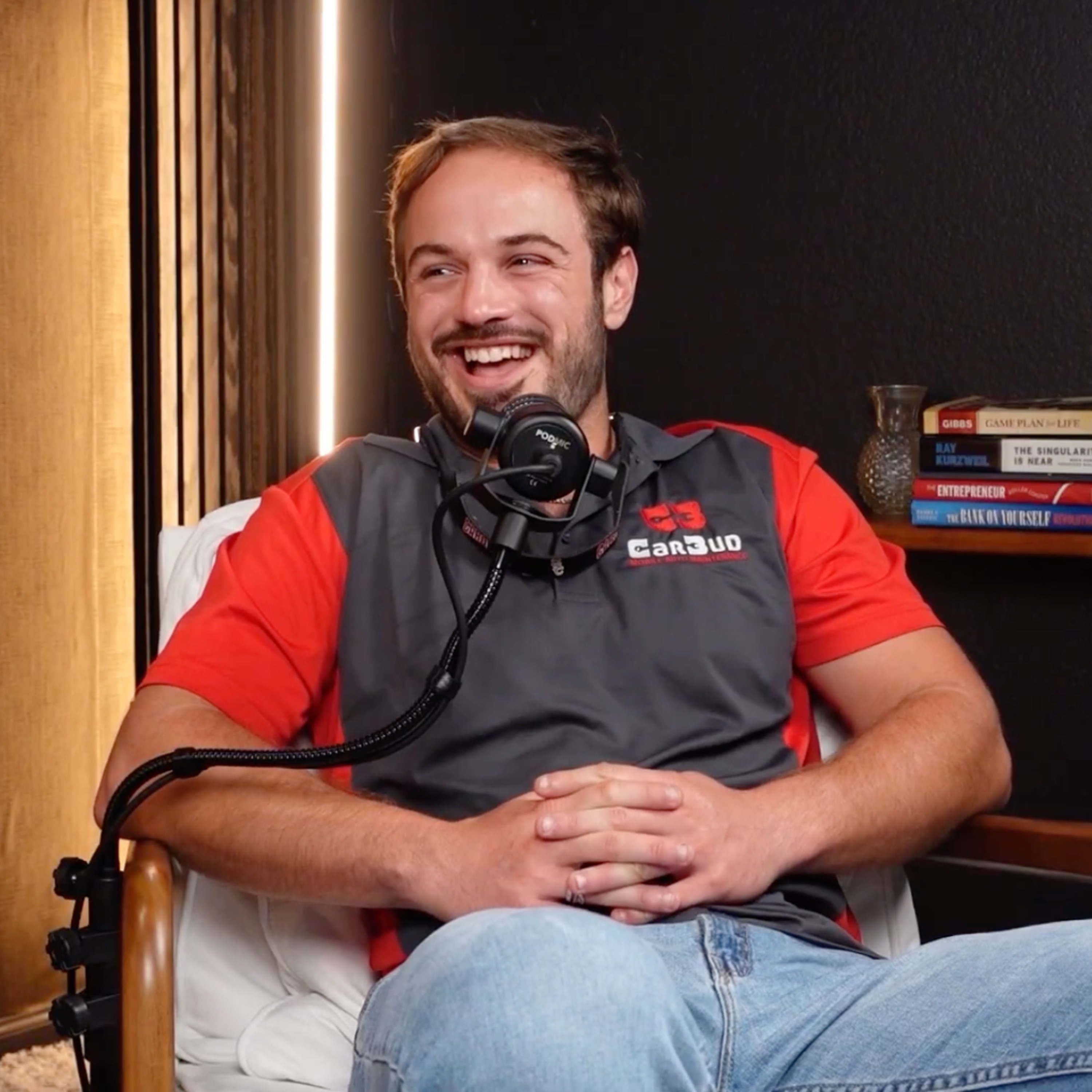
Founder, Carbud
Show notes
In this episode, we sit down with Harrison Reese, founder of Carbud, a business built from the ground up through grit, cold calls, and consistency. Harrison shares how his background in direct outreach and relationship-building helped him break into an industry where trust and speed matter most.
We dive into how Carbud grew from a solo effort into a growing operation serving Central Texas fleets, and what it really takes to build momentum when you're starting with no connections or capital. From learning the needs of fleet managers to building scalable systems, Harrison offers a real-world look at launching a service business in a high-demand space.
If you’re interested in how to turn initiative into income - and build something sustainable from scratch - this episode is for you.
Key moments
- Meet Harrison Reese of CarBud
- From South Carolina to Oracle in Austin
- Cold calling owners for their best advice
- Taking the leap into entrepreneurship
- The mindset it takes to start
- Why B2B outbound sales works
- Why fleet upkeep matters for home services
- How Gold Eagle landed its first customers
- Where CarBud is headed and the rip it mentality
The mailing list
Get the next conversation in your inbox.
One short email when a new episode drops, plus practical tips on healthy homes and building things that last. No spam.
Transcript
Harrison Reese with car bud Thank you for joining me. It's good to be on the podcast. I love this stuff. So I'm excited tell me a little bit about yourself and Where you're from and who you are yeah, so I'm originally from Charleston, South Carolina and I grew up there. I'm originally from Delaware. That's where I was born but I don't know, at this point maybe 14, 15 years I've been in South Carolina. So wasn't originally from there, but I mean, that's my home. That's what I call home. So spent all of my high school there, college. I went to college in South Carolina.
I really just stayed in South Carolina and then came out to Texas after college. And that's why I'm here today. Amazing. You're a game cuck. Yeah, Gamecocks right here if the camera can pick it up. I Will admit I'm not the biggest Gamecock fan, but you know I went there, so I have to give them some support What made you come out to? Austin, Texas Central, Texas I came out here for a job at Oracle at first after college and they had a couple openings and I heard great things about Austin, Texas, and I had a family member in Dallas so I was like well you know what what's the what's the worst that could happen
like let's just go do it you know if I if it all blows up in my face like I can go live in my sister's place so it's no problem but I heard great things about Austin and I just wanted to check it out so I came out here for a job at Oracle and so You're not with Oracle now, obviously. No, yeah, no. What were some things that you learned at Oracle? Good, bad, ugly that, you know, started to set the tone for the last couple of years. I would say there are a lot of things were learned and I was only there for a year. So it's amazing how much you can learn within a year if you really pay attention. But one thing I learned was sales. So I'm definitely not Good
at sales by any means, but at least I understand the process and like what it takes So I think that if anything can make or break if you're good at sales if you understand how it works To I really understood the importance of good leadership because I was under some terrible leadership and it was really bad and I think a lot of people could relate to that but in general you just terrible leadership and almost vowed to myself that I would never come close to that bat of leadership. So there was another one. I also learned how important good friends are, you know, those that have your back. So that was also really important. And then I also just learned a little bit about business, actually, because you were talking to business owners and
pitching them accounting software and like trying to rip. their current solution out and trying to put in a new one. But you really started to understand what their problems were. And then you almost were kind of in the arena, sorting through potential objections and problems and trying to put a solution to a problem. And then I did I did another thing that was definitely illegal at that company, which was like, I just hated that job so much. I actually stopped pitching and like I would just cold call. And instead of pitching the product, I would just ask business owners for their best advice. So if I got a key guy on the phone, I'd just be like, hey, man, I'm young and kind of interested in this whole thing. Can you give me some tips about? And I wrote down an entire journal of what that all
looks like. So that was on the tail end of when I was planning on leaving. But yeah, I learned a lot there, a lot of stuff. And you were able to take the business knowledge that you gained from basically learning businesses that you were selling to, right? The more that you were able to understand their business, the more you were able to understand their problems, the better you were able to sell to them. Yeah. Well, you picked up on a lot of like, cause obviously you're going through, you have metrics you have to hit and you have all this stuff. So you're going through a lot of calls and then, you know, some people will tell you to go off and then other people would be like, I'm interested. And you can start to see If you were paying attention, you can start to see what makes a good fit and
what makes a bad fit. And then you could start to kind of hone in on like what your magic formula is. Like I never called onto that, but like you start to understand more and more and more what that looks like and how you could convert a customer. Definitely. And then, and then looking at what you did by going away from the normal process that they wanted you to go through and start cold calling people. Did you find success in that? Or was it more just a trial and error wanting to do something different? It was funny. Cause like we would go through training In the beginning which was a joke like one of my best buds who i i'm still great friends with. We always joke around and laugh because there was one exercise and you're like fresh out of college and you're like this. Big office like you're wearing the the attire like you feel like, you know a million
bucks, but really it's just all a sham but anyways, it's just uh They they did they made us do like this voicemail exercise. They were like, all right guys We're gonna go ahead and like we're gonna go out everyone's gonna break out and do their voicemails and then we're gonna come back and share like who left the best voicemail and yeah, sure like But at the end of the day, it's like why it's just funny stuff like that. Um I got off track, so now I'm lost. No, no, I did. I love hearing what the corporate arena is like, especially for, for people right out of college. Yeah. Uh, in theory, that's what you've been prepared for is, you know, four years of college. What was your, what was your degree? Uh, mine was finance. Um, so, but yeah, like you, you just picked up on a lot of, if you were, if you
were interested in business to begin with, like I had people in my class that were communication majors or journalism majors like they weren't necessarily interested in business maybe they just picked this up because you know you flash 55k at someone and you know they don't know what to do and you know they'll take it but if you were someone like me who is kind of interested in business you could really start to play around with get into the training and get some good tactics under your belt but then also talking to the business owners and like understanding what all that means you could learn a lot for sure. It's all about tools in your arsenal. Yeah, 100%. So what would be the number one out of the entire journal when he started asking these business owners and going rogue on what their best advice was? What would you say is the one
that sticks out the highest? Someone just told me to never quit, you know, and I think that's pretty standard across the board. And someone told me like, just do it. and then someone else told me like don't quit and then I'm sure there was a couple more like technical answers in there sprinkled in there I'd have to go back and look at the journal I kind of wish I did before this because I'm sure there's a lot of good stuff in there but the one that stood out to me was like just go for it and then the other one was like just don't quit yeah we got some we got some Nike taglines in there yeah yeah exactly they were giving you some some non-answer and you really took it to heart for sure I mean well when you think about someone who's actually like in the trenches doing it like If someone that you're looking up to for the advice is giving you the advice that you're looking for, like
you should take it to heart as cliches and they sound whatever they're telling you. Like, I mean, it has a purpose behind it. So definitely. Yeah. What would you say is the best way to transition away from Oracle and into CarBud? Because I know there was a small period there where you had, you know, started to fine tune yourself and fine tune your life at that time. How did you get introduced, at least from the entrepreneurial side, to want to do this, to jump off into your own territory? Was it a culmination of a lot of different things or, you know, we had a great conversation in December of 2023 where you and I got connected and our friendship and relationship in the business side has developed from there.
But what was your lead away from Oracle and lead up into CarBud? Are you actually asking about the actual process or are you talking about the money? mindset behind actually doing that? I think the mindset would go into the process. So yeah, both. Okay. Yeah. Well, I think to back it up a little bit, I actually took the Oracle job because I was studying finance in college was going to go into banking. Well, I wanted to go into banking. It was never guaranteed, but I wanted to go into banking. COVID happened and then you everyone had you know all this time on their hands and I'm just sitting there twiddling my thumbs in my dorm room apartment and I'm like I'm not doing banking like I hear it's miserable and everyone I've talked to seems so like Yeah, it wasn't for me. So then I was like well I don't
really like school to begin with and I don't really want to drop any more money on this whole thing and Like it's time to get out. So I was eligible to graduate in three years and I ended up deciding to go that route without even having a job lined up so I only had about when I made the decision to graduate in three years and and when I was gonna Re up on everything was like within two months. And so I was like, all right Well, what are we gonna do here? And I was like, all right, I'm just gonna go for it three years And I'm like, well, what am I going to do for a job? Because I told myself, I am not leaving college without a job, like not happening. And, uh, I remember Mark Cuban saying, if you wanted to start a business, you just learn how to sell,
like get a job in sales and learn how to sell. And I was like, all right, well, I mean, I can do this Oracle thing and get some experience under my belt. I was going to do two years there, one year for the BDR beginner role. Cut your teeth and then year two to do the Closing role which is like the role that everyone goes in there for and then just see what happens reevaluate Well, that didn't really happen. So I did a year and then I was like, well, I I don't like this job at all I don't like the leadership. I don't like where any of this is going and I Ultimately was like well and I applied for one other job prior. I made it all the way to the final round spent like two weeks, two and a half weeks, maybe
going through this entire process and doing what sales does is following up on the whole thing and trying to get a feel for where this whole thing is going. Like, what do we think? Blah, blah, blah. And I'm getting great feedback and I make it all the way to the final round and then come decision time. Oh, we actually decided to go with someone else. And I was just so sick and tired of that whole thing. I'm like, I'm done throwing the resume in the in the pool and like hoping for the best, like I'm sick and tired of waiting around for these people who, you know, I'm just like, let's just do this thing and give entrepreneurship a shot and see what happens. Because like, like I said, I was only planning on doing two years and I had one year of runway left. So I took whatever money I had saved up, which wasn't a lot. And then I just kind of went
for it. Like I didn't have a plan in place. I had nothing and it was pretty dumb. But at the same time, I'm kind of glad I did it that way because it really kicks you into high gear. But I mean, I was like, pretty much planning on failing and was going to fail miserably, but learn a lot. And at the end of that year, that second year, I was just going to go back home and take what I learned through the failure and take that on for the future. You're still here? Still here. So when did you officially launch CarBud? Obviously you sat down and you were saying to yourself, okay, I want to go into entrepreneurship. I've got this resume and experiences learned from
Oracle. What was the process of getting CarBud off the ground? Well, from the time that I quit, I probably took about a two week hiatus of just like, Doing just doing whatever I wanted to do. I mean It felt great, but then realities really starts to kick in and you're like, all right. Well now what? but that whole time I remember sitting there like on my computer researching like the idea that I had and Everyone was like it's not gonna work. You can't make any money doing this like nothing and I was getting really nervous because I was like Oh, you know, this is the only plan like I had in mind And I was just like again, I don't care Because if I fail, like, I'm just going to go home. So it doesn't matter. And so just went for it there. That was
probably in October of 23. Yeah, 23. And then that's when I was starting to put together the website. And I was also setting up the back end. So like the scheduling stuff and What else did I do? Obviously all the legal stuff like the formation and all that and then the fun stuff the fun stuff And then I was at a point where I was like, alright Well, I've got all the equipment like I've established my supplier relationships and I have the website up and I have like all the back end stuff that I knew of at the time set up and Then that was kind of it. Like I was just like sitting there waiting like I didn't really know what to do You were waiting for all
those customers to just start flowing in. That's right. Yeah. And, uh, and then that, yeah, I mean, that was really it. I didn't really have much going on at that point in time. Well, I think, I think that background is important, um, really because I think what's stopping a lot of people from jumping off the cliff is just not knowing where to start and, um, having a brand, having the legal aspect of it completed is, is, you know, from a standpoint of the internal revenue service. That's the most important thing that you can do. Um, but from the logo standpoint and the branding standpoint and the website, like those are all things that really need to be in place and thought of properly before you go down this road, because at the end of the day, like that's your marketing. That's half
of your marketing. It's how you show up in the, in the world and make it inviting for people to call you for sure. Well, I think going a step back. I feel like all that stuff is really easy to research, but no one actually tells you like with with inside your own mind, making that jump and making that commitment like no one ever really I don't think I don't think really a lot of people touch on that because all that stuff like the branding, how do you do the website like that's all YouTube. Like I paid someone like 300 bucks to make my logo. But The actual mindset to like go forward and go for it I don't think a lot of people talk about and I also don't think I think that's Of course, that's a huge reason
why people actually don't start if they're actually interested in starting because of that mental block So definitely. Yeah. And then you got to, you got to have that attitude of, you know, similar to yours, maybe of, you know, you, you had a fallback plan. Um, you didn't absolutely need this job at Oracle anymore. And you could decide to jump off the cliff with a parachute in theory. Right. Um, and I'm very happy that it's worked out for you so that you're still in Austin. Um, but at least you had your family back in South Carolina and a different future waiting for you there for sure. Yeah, and I also think too that it's I just had this thought the other this funny that we're talking about this because I literally had this idea in my head the other day of It
makes sense for me Like I think I remember also hearing whenever I got started people saying like don't leave your job until you have like a foundation set up well for my business like I Can't have a job and then also like build a foundation It's not possible because like building the foundation is a full-time job And so I think that advice comes from just in general, I think people, it's like a general piece of advice because it's not tailored to specific individuals because the assumption is, is like, you're a little bit older and you maybe have like a house or you have like a family, you have like responsibilities. Me, I literally have nothing, like no debt, nothing. My car is paid off. The only thing I was obligated
for was my rent, but that was it. So in reality, I was able to, you know, consolidate a lot of my own personal expenses and make the commitment to myself and not really have to be pressured to depend on anybody else. So it's easy for me to say like, yeah, go ahead and get started. But like for someone that has a family and like, you know, it's, it definitely takes a little bit more consideration and I've never actually gone through that process. So I don't really know what that looks like, but I do remember that being something that I thought about was like, you know, doing it and getting started when you don't have anything is like prime time because you're not committed to anything. So you can just go for it. And you can look at it
from two. two different avenues right from from a 12 year old standpoint that wants to start a pet sitting or lawn business to you know probably around the 25 year old age where you have less responsibilities less bills there's a lack of experience during those years that you don't have and maybe a willingness to just run through anything to try to get this to work that maybe someone older doesn't necessarily have anymore because they are going to weigh risks differently than someone that's young and dumb. But on the other side, it's when you're 40, 50, you have a lot more life experience. You have a lot more experience through sales or through whatever avenue you've cultivated over your entire life. But now you have the responsibilities. You have
the kids, you have the wife, you have the house to where you can't just throw away your day job and try to do. something like this. Um, I think it also depends on what business you're in, because a lot of different businesses have a starting cost that is prohibitive to someone who, you know, um, has to work their eight to five and then also has to work on their business eight to five. Um, so I think from your standpoint, I think you're absolutely right. I think you had the perfect culmination of opportunity, uh, in, in front of you and the education behind you to, to mix the two and go. Yeah, I think just understanding I always I really like chess a lot because I feel like a lot of it a lot of all this stuff can relate to it because when you're playing chess, you have to look at the
board and see what's what's a threat what you can attack and like what you need to develop to prevent anything from happening. So I think it was almost kind of like a game of chess where you're just looking at all the possible avenues like All right, if I quit my job, this is how much money I have and I know I can consolidate my expenses this amount. So that means I have this much runway. I don't really have that much startup costs. Like I think I started with like a thousand bucks or like two thousand or something in that range. Right. So that's how much money I was going to put into that. And, you know, I'm going to give myself this date to like get some sales going and that's going to be it like. I think just approaching it from that and assessing what your threats are and where you need to go on the offense, I think is another big key. But
yeah, you're 100 % right. It's like highly dependent on the individual and like what's going on in their life. But then three, you know what business you're in for sure. Yeah, I agree. Yeah, and now it's probably closer to chess and checkers and monopoly and you know all mashed together all together Yeah, all the favorite games But it sounds like you set a schedule and a timeline for how you were doing things, right? You want you went through things methodically to try to figure out where your top number was of this is how much money I'm putting in and How I can start to Nurture relationships and actually start the selling. Yeah for sure. Yeah, I think it was all about just putting the process together and, um, you know, just trying to get a feel
for what the market was like. And luckily for me, it panned out because it, you know, if I was making calls and people were like, nah, like, nah, like that would have been an easy, just, okay, well, this is not going to work, but people were actually interested and, and people wanted, like, if I was going to go back, I would probably ask before going through this entire process to see if there was a validation as a market research. Yeah, like your classic market research which I did absolutely none of And so, you know again, I just kind of got lucky with people actually wanting the service but I would definitely go back and do that again. But yeah, like having a timeline set just keeps you accountable and This just gives you something to shoot for so Yeah. Goal in place that you're looking forward
to. Um, yeah. And then from your perspective, everyone's basically got a car, especially in central Texas that we don't have a great transportation, um, to, to go into something that almost everyone in the city has is not, can't, can't be a, can't be a bad choice. Can't be a bad choice. Similar to being an HVAC plumbing electrical, right? Everyone's got one. Um, everyone's got something that that can break. Um, so from that perspective, I mean, I, I was thinking back. to our conversation in December of 2023. And when you called me, I almost thought of a Grant Cardone, a little video that I saw of, you know, this college kid that wanted to showcase how he would be on the phone trying to sell to a customer, right? And I remember you said, hey, my name's Harrison with CarBud. We're offering a service where we
come to your business location and do oil changes for your vehicles. And then you listed out. problems that I could be having. Like, Hey, are you, are you having issues of your guys sitting at an oil change place for a couple hours? You're paying them labor. Uh, you know, obviously they're getting to the job late and then the, the, you know, the, the company that they're, they're at for the oil change is starting to sell them different stuff. And you're trying to deal with a credit card over the phone and all these things. And it hit me immediately of, yeah, I'm dealing with all those issues. Um, So I don't know if that was kind of a learned trade, if it was a process that was given to you at Oracle of these are how you reach out to people and this is the list of things that you talk about. But you like couldn't have had that conversation better with me because it was a pain point. It was something that I had recently gone through. And so it was something
that was at the top of my... you know, not necessarily to do list because I didn't even think that there would be a service out there that would be able to take care of it. It was, you know, bringing me a solution to a problem that I didn't realize was solvable. Um, and the way that you laid it out to me was like, I, I can't imagine any better conversation, uh, than, than that one we did. Yeah. I mean, that's just the beauty of B2B sales because essentially Having to go through the traditional which is like creating brand awareness through advertising and other things like I didn't have any experience in that nor did I want to spend any money on that because I didn't have any money on that like all I knew was B2B sales and how to how to deal with businesses and business owners and I still love B2B sales because It's
just so much more fulfilling But I mean, that's the whole that's the beauty of it, you know, because you're presenting someone cold which is terrifying but like cold that You're just kind of getting a feel for whether or not they're meeting your good fit criteria as a customer, and then hopefully providing a solution that will solve their problem. It's not just a cash grab, right? Because then it's just a problem. But that's the beauty of the outbound. process when it comes to B2B sales. And it's much different than, than marketing through Google or any other, any other means, right? You have to have a good chunk of change to start throwing out a lot of different avenues to find something that worked.
And then you want to throw more money at that, but it might not work the same that it did a month ago. Um, so you do, you were basically trading time for money versus like spending time. reaching out cold calling to businesses versus the money aspect of just throwing money at lead generators. Um, and I think that's an important differentiation, especially for starting your own business, because that's something that anyone can do. Uh, you do have to have a certain amount of experience on how to talk to people, but you can also start calling people and learn it on the fly. Yeah, 100%. And I always remember. They would give us, and I still do this, and it makes sense to do this, but you would get your lead list and then you would segment between who's
your best fit on this list. Who do you want as a customer? And just throw them to the side. Keep them separate. Then you have guys that are like, I don't really know about this, but there might be something there. Probably not and then you're like middle list, which is you know Great fit but like let's just see I would always practice on the lower lead list because if I burn them like it didn't matter to me because Nothing lost nothing lost and if anything it was good warm-up and good experience to like I mean, I still get nervous on the phones and like, you know, I definitely also especially after not getting my I always felt like I never got enough reps
in whenever I was doing sales. So, you know, I would always try and I would do this if I had to pick up the phone again today would just go through like the bottom barrel list and then progress up to, you know, the more important leads and trying Um, get those converted and stuff like that. Cause at the end of the day, you're selling yourself and that's probably the toughest thing when they hang up the phone or, uh, yell at you, right. Is that, wow, they really didn't like me. It's hard not to take that personally, at least from my, my standpoint. I know that's how I feel. Um, so I could see, yeah, I can see where using the, um, the people that probably aren't going to be a good fit for your company anyway, as the testers that that can definitely lead to success for the middle and then the high
ticket or the high priority people to call. Yeah. And, and then to like, again, if you're just starting out and having no idea really what your customers potential problems are, like you could always, you always theorize what they could be, but until like you actually go to them and like see if your theory matches. Most of the time it doesn't so then they're gonna hit you back with maybe something that you didn't know of But if you can figure that out on the bottom of the barrel lists and then you know You can start to formulate better Qualifying questions for the next tier and then the next year and by the time hopefully you get to the top You'll have like kind of a juggernaut solution that makes you It's a no-brainer, you know, but if you if you do it backwards like you kind of shot
yourself in the foot Well, what about home services specifically that, that you were able to kind of corner that market, right? For, for your own business. What, what was it about the home service industry that was so enticing to you? Um, in the beginning, cause obviously my theory of it has changed over time, but I I'm trying to go back from when I first started and what I thought about it. At first I thought, well, Again, I have experience in B2B. So I want to go after businesses. And then as I started to think about it more and more, I was like, well, you know, as a reoccurring thing, everyone needs preventative maintenance for their vehicles. Like there is no work around it. Like you have to get it done.
So why not try and get in front of that customer and say like, hey, I already know you need to do this. And I'm sure this current solution is a pain. I'm offering you this. we can just do a little trial and see if it actually benefits you and and kind of go from there but it was mostly because I knew that Everyone needs preventative maintenance and everyone hates it and everyone hates it and also to like home service Businesses like their vehicles are there are there bread and butter and it's I personally think it's the it's the main Driver of their business because if you can't get a tech out to the house like how are you supposed to make any money if your trucks down like how are you supposed to get
your tech out to the customer's house and and then that customer makes you money so like your vehicle maintenance and upkeep and efficiency is vital to to any home even my business right because i have to use a vehicle to get to my customers so i mean i'm i'm right there in the mix of the whole thing so So that's why I knew it was going to be a good fit because of those. Reasons. Yeah, it's a lifeblood of our business and we put a lot of miles on it, especially in the middle of summer And the last thing we want is for a vehicle to go down right a blown tire Even you know waiting two three hours for AAA to come rescue you is a pain and you're absolutely right now You got to call the customer now You got to explain to me my technicians running a
few hours late that customer might Decide to call someone else right and and the amount of cost on the maintenance end To get ahead of that to make sure that it doesn't happen It's not really a cost that we look at because if it doesn't happen, it doesn't happen. Um, but once you have a certain amount of vehicles on the road and it does happen, you realize how important the preventative maintenance is. I think from my standpoint, it was just, it was a problem that I almost didn't want to deal with because I didn't have a solution for besides, Hey, go sit at the dealership for four hours while they fix X, Y, and Z on your vehicle. Um, and at the end of the day, it makes our guys safer too. So, um, you know, we want to, we want to. stay on top of it as much as we can. So from that avenue, what are all the services that you offer at this time? Yeah. So our core is really just old changes
because I mean, that's really what gets us in the door. And then we've pivoted obviously multiple iterations as time has gone on. So now It's more so of of all changes being our primary as well as brake service. But again, we do offer tailored solutions for other customers. Like if you have a vehicle that needs like a full rehaul and you know, I'm not talking about rebuilding an entire engine, but just replacing various parts that we wouldn't typically do like we can do that. But our main core streamlined operation is all changes. and breaks. That's it. And that's how you market yourself and that's the the customers that you're going after or the what you're going after for the customers is the oil changes and
the breaks. Tell me about your your short stint in the detailing business. Oh yeah well the as I was again going through the process of trying to figure out what I wanted to be as a business and like the vision in the beginning before fleets even got involved it was a lot of how the residential market would work. And ultimately like at the beginning of time, I knew that there wasn't going to be a whole lot of money to be made there. And I thought, okay, well, as I, again, as time went on, I started to learn more about like how important your average ticket is and like what your ticket value is in general. And acquisition
costs for that customer. Correct. And so then I was like, all right, well, I feel like Getting an old change and a detail is like a great sort of Tandem product that you can bundle together and really what I was trying to do is capture At first it was I was marketing to residential customers for all changes while bundling in a detail as like to Kind of eat up some of the marketing cost or provide more value for conversion but Then I started to realize, you know, doing an oil change and a detail really is like two different things as much as they are in tandem,
like you're dirty, you got to go from dirty to clean. And it doesn't really make any sense. Now, sure, you can go clean and then to dirty. But like, what happens if you have multiple cars and, and also jobs in a row? Yeah, by the third job, you're you're gross and it's hard to convince like a technician who's mostly on the automotive side to convince them to like clean a car because I will admit like that's two different personalities it is it really is like I mean yeah like I have I have a friend and I don't think he would ever touch a car when it comes to like maintenance but he has no problem doing detailing and I actually feel similar because like I did not like doing the detailing whatsoever and my average ticket was like I didn't want to spend all the money for the equipment. Like it just never really
worked out. And I didn't really put a whole lot of effort into making that work out. Cause in reality, I didn't really want it to work out. Like it just wasn't really how I had a vision for the whole biz. So I didn't even bother going down that route. But, but, but from, from the beginning stages, it was, Hey, I can get, I can get more customers with this, right? Like you said, you can add more value to the customer. I think through the conversations that we had with the detailing specifically, it was, it seemed like there was a lot of people in that market that were racing to the bottom on cost. Correct. Or the people that had the niche clientele for more expensive vehicles had way more expensive equipment, um, where they could justify a $289 clean. Um, and then you're, you're going after it in the sense that, man, I'm paying for. the
lead and it's basically eating up most of the cost of the detail anyway. And now I got to go by the lifetime value of that customer. But how often are they really getting their detail done, which then went into, okay, if I can sell them an oil change and get them on the plan, then maybe there's a way to make this work. But at the end of the day, it was, it was sucking up a lot of your time. Yeah, there was there. I mean, don't get me wrong. I think detailing is great. And it just wasn't for me. Like I didn't want to, I didn't want to go through the process of figuring it out. Now, I always like my attitude of like, if it doesn't work out great, but like, at least I learned something from it because I got, I got some reviews from that whole process. So that beefed up my GMB a little bit, not a lot. And then I also got exposed to PPC, which
was, you know, it is what it is, but Getting introduced into that, I think, was a good introduction. It did not turn out well. But again, you were able to educate yourself on it, though. You learned a lot on that. And it paid for your learning experience. At the end of the day, if you go back to right after you left Oracle, this was all about an education experience. It still is, yes. It always is. It will never stop. It will never stop. And I hope it never stops. It was a good way to learn about a few things and I got exactly what I wanted out of it. But yeah, I mean, I think it's a good biz. It just wasn't for me. Yeah, the learn more, do better attitude is something that's been reoccurring many times
in the last couple of years for me. And it's, it's always that mindset that you have to just continue pushing on and you, you can kick yourself all you want for spending money on something that didn't work. But if you don't learn anything from it, you can't take it with you for the next shiny penny that you're looking at thinking, this is going to be the golden ticket idea. Right. So in, in, in a lot of ways it did help you. grow because one you saw the pitfalls of it to where you can avoid pitfalls in the future, but it also just continued keeping you in business. Yeah. I think I also learned from that experience how everyone always talked about just focus on one thing because a lot of people tend to go in different directions. And I think that's when I really got a good glimpse of what that means. Now it might be a different story if I actually charged correctly doing that whole service and
like maybe optimized it a little bit better, but like I didn't. And so like you said, it ate up a lot of my time, didn't really make a whole lot of money. And I really realized like, wow, I need to streamline what I'm doing here because I'm making the same amount, but I'm working three times as long. Like doesn't really make a whole lot of sense. Again, could have charged more. Yes, but I didn't. Um, but again, it just gave me that focus of, all right, well, we just need to focus on like one thing. and just go from there. And detailing is more labor intensive than the oil change, right? The oil change is more, you need to know what you're doing more than detailing. Detailing, in theory, everyone can be good at detailing if you want to put some sweat equity into the work. For sure. And again,
I think it's a great biz, but at the end of the day, it just wasn't for me. Now, if I spent a lot of time in that, biz and like made it work. I'm sure I would have been doing just fine like anybody else. But again, like I didn't put enough time into it nor did I want to. So it just wasn't for me. Well, and we'll stop talking about detailing here shortly, but I do want to make a couple of points. It also didn't match your the main core of your business, which was correct. Yes. Uh, because most of the time when, when I'm thinking about you cleaning one of my work vehicles, it's, I just hired a guy and I want to make sure that the vehicle is clean for that person specifically. But most of my guys are in the same vehicle day in, day out. If they, if they live in a pigsty, I tell them to clean their own pigsty, right? I don't really want to spend additional money
to clean their pigsty for them. What would you say to someone who wants to get into the detailing game? Obviously charging correctly in any business is going to be one of the most important things that you can do. Will there be some things that stick out? Like, let's say two years down the line, you said, all right, I'm going to pick up detailing again. What would be some things top of mind that would help you speed up that process? I would probably learn about detailing. To be a little bit more efficient and just get a process down But if I was gonna start from the get-go and like really get going I think one it would be how am I gonna get my first couple of customers because like you can Buy all the equipment do all the stuff But like if you don't have any customers like what's the point? So like I would 100 % figure out how I'm gonna get customers first book some and then grab all the
stuff and then do it But then to just making sure I'm building the foundation which is good logo, good website, making sure I have like a good fit on and cool company, like uniform and show up professionally, professional, like don't skip out on that because that means a lot. And then I mean, do what you have to do because that's what I had to do. But like, if you can do it, go as Professional as you possibly can and then just building the foundation of getting some good customers getting some reviews and you know trying to learn more about what customers like and like learn about the customers that you do book like Who are they and start to develop your perfect avatar from there and go from there?
But yeah, just getting customers and learning actually how to do it and then just doing it that that would be the one thing I would do Yeah, and I think you made a great point with the online presence because that's that's something that You know, it's hard for me to look back eight years now for when we started gold eagle, but, um, the online presence now more than ever is so vitally important because the first time that you reach out to someone, they're going to be looking at your online presence. Um, so from a, from a website perspective, that's all well and good, but how do you show up on GMB? Can people read the reviews of the customers that you've had that had a good experience to protect themselves by going through a bad experience? Um, I feel like that's for the most part, how customers use it is just to make sure that they. Aren't falling into pitfalls that you know, maybe someone who didn't look at Google reviews might yeah, and I also think too like I mean I still
suffer from this but You know who what do you got? I mean, what do you do whenever you look up, you know pizza near me, right? Like what you go I guarantee you you probably don't go to page two. You only go to page one, right? So I'm probably looking at who is closest to me because I might go pick up that correct, but then I'm looking at reviews Yeah reviews, but then again like when you're first starting out, you're never gonna rank on page one you're never gonna rank at the top and Especially someone who's been in it for so long and has that organic Yeah Foundation especially with the reviews and then you attack on PPC on there. So now they're really showing up at the top I mean you're not gonna get there. So I think Taking a different out-of-the-box approach as well to get you
going would be like just boots on the ground doing some crazy stuff like you know door knocking or setting up like a little tent and putting like free detail in exchange for a review like just exchanging time for money To build the foundation and then flipping the script because then it's almost like if you were gonna build like an instagram brand like you would build your account first and then once you had good traffic and constant traffic then launch the product because i mean that just makes the most sense so i think that would be again something to keep in mind is just. Go to the roots of the gorilla tactics and go
crazy there and then you know. start to lean into some other means. One of the most common is when you get a job, you clover leaf with your business cards or with your flyers around that same house. So that if one of those people asks their neighbor and says, Hey, did this guy come to your house? They hopefully give you a, you know, five star verbal rating because a referral from a closer. Oh, someone who's closer than Google, right? We don't really have an affiliation with Google. It's just more, we go to Google because those are the people where the reviews show up. If I got a recommendation from Harrison to go to a pizza restaurant, I'd probably take that recommendation seriously. Cause I know you love pizza. Um, and so from, from a neighbor's
standpoint, that's a closer referral than, than somewhere else. Yeah, for sure. Yeah, there's there's some other tactics too, but you know, I think again some of the tactics used are very industry specific Sure, you could tweak it but like does it make sense? You know what I'm saying? So yeah, there's there's some ways it's all about just getting exposed to it and learning about and testing it out one thing we haven't talked about is a Platform that you're able to put all your customers on a database and FSM a CRM Tell me a little bit about your CRM and uh, your relationship with, uh, with the CRM in general. Yeah. So I use field and, um, field's been really great. And, you know, there's a whole nother avenue,
which I'm sure we'll touch on, but, um, yeah, that's just your classic CRM. I would call it more of a field management software than anything. Um, but it does have a CRM component to it. So it does help a lot with managing those customers and keeping track of. customers and then, um, being able to self book and do all that stuff. Like it's been really good on that front. Um, when it comes to managing the residential customers and stuff like that, making it easier for your customers to do business with you as part of it for sure. Uh, but then there's the also the side, you know, when we talk about, uh, the lifetime value of your customers or the customer acquisition costs, um, you know, what marketing did what, at least in terms of revenue, right? So where you can look at where these leads were coming
from, from a marketing perspective, and then be able to run reports on, you know, did Facebook leads do better than Google leads to know what marketing avenue to put more money in. I think there's a, there's a pitfall with people who just start a home service business or, you know, businesses in general, where you have a database of clients that you want to be able to reach out to in a year. Um, and you want to be able to run reports on the zip code that you should be marketing for. Um, you know, mailers, there's so many different things that an FSM can give you on the backend that I don't think a lot of people realize when they're first starting their business. Yeah, for sure. And, um, I still struggle with this to this day, which is, you know, there's
so much data that you can take. you know focusing on which one I guess it depends but I think the hardest thing I've had to deal with is actually organizing everything to where any data that is coming in is like contained within you know like what you said for the example of the Facebook leads like making sure that process so that that data can actually accurately reflect it sometimes can be a little bit difficult, especially when you're looking at so many different points. But I think when you have a good CRM, you know, a lot of that stuff I hear all the time, the home service guys just raving about service Titan because it has so many metrics for you to keep track of. And, and, and, you know, that I think that's something really important to keep in
mind. Um, I can speak to service time specifically. There's a reason why they went public recently. Um, and, and they definitely had. They didn't corner the market. They were the market and they are kind of the gold standard when you look at an FSM slash CRM. However, when I was with service time, I probably used 15 % of their total, um, platform, which I'm paying for all of it. Right. And so from my perspective, I want to be able to use all of it, but it's not. It's not as straightforward as, you know, some of the other CRMs that are out there to just start in and go for it. And as you start to get into 2030, 40 trucks, I'm sure Service Titan is kind of the necessary one to go with because you have the revenue generated
to be able to use a platform like Service Titan. But then you also have a team in place that You know, can start to go through these other avenues and fill out 50, 60, 70 % of service time at the moment. I'm almost positive there's zero people that are at a hundred percent of service time, basically utilizing every single aspect of that platform. I want to say there's no one at 90%. So they've almost purposely built it to where you really can't use all of it, which is great. If you want to continuously learn through everything, I think for most companies, especially under the $5 million revenue mark, you can do enough with all the other CRMs out there because. at the end of the day, you're looking at reports, you're looking at different, different numbers and putting different numbers together with other numbers to try to get the number that you're looking for. Um, so specifically, at least when
we talk about the marketing aspects, it's okay. How many phone numbers do you have? And each phone number is designated for one is, you know, designated for Google. One is for Facebook. And now whenever that phone call comes in, it's tracking it all the way through to where I can see from Google, wow, look at this month. Okay. I did 10 X or 11 X on my marketing. Um, and then, you know, from Angie's list or from a thumb tack. Okay. I'm, I'm trailing a little bit behind there, but maybe I need to change my keywords. Maybe I need to change my, uh, like did this one, did I answer in a proper amount of time? Was this just a weird one? You're able to go as granular as you want. Once you actually have the data. Um, and that's one thing from, from my perspective, looking at you, you had a lot more. understanding of those numbers very early in your business.
Whereas I was kind of finding by the seat of my pants and just run in the field every day to where I I'm now getting that understanding many years later in the business than than you have. Well, I think, you know, I've just done a lot of reading and a lot of educating. But, you know, it still doesn't I think it's super important when someone like they know what they're talking about. But then can they actually implement it and I will admit that is the hardest part because like I could know the numbers and all this stuff but when I admitted that you know there's still a lot of stuff like data that I don't even know and I would love to organize it to know but like how do you organize it or how do you implement these things that's the most challenging part is just you know you could
know everything but then Are you actually implementing it and if you are? You know Are you executing on? The the things that you were looking at to make the change like I just think that's that's one of the hardest parts that I struggle with there's only so much time in the day there is but I Have a question for you. Of course. So you asked me if I was gonna do detailing again What and that whole strategy to get started if you were gonna blow up and do HVAC again? How would you get your first 10 customers? Not using any of your current connections like you're just start. Let's say I put you in Alaska and you've got it and you don't know a single soul. Nobody go Alaska. I would probably. I would probably
be a fish out of water in Alaska. If you put me in Arizona or some warmer climate, I could probably figure it out better because I don't even know what type of heating they have in Alaska. Something monumentally hot is my guess. Exactly. For the most part, we got our first leads from home warranties. So a home warranty company, if you don't know, is basically something that you pay monthly for. You reach out to that company when you have a problem. They send one of their I want to say it's a one of their vendors and I was a vendor for a couple of different home warranty companies. And so, uh, you know, they would send me out there. There was a copay of 60 bucks or whatever it was. And, you know, I was to repair the system and replace this component.
Um, if, uh, basically at, at no cost to the customer. So it was just the copay amount. And so, you know, you would go back. to the office and you would make the call or you would call when you're on site and you would say, Hey, I found a capacitor issue or I found a blower motor issue. And there would be a price book amount that you were paid for by the home warranty company. Um, most of, most of our business came from home warranty companies, at least in the first three, four months, because you're basically signing up. Like the home warranty companies are always looking for contractors. That's a red flag to me. Um, so Brand new right out of the gates, you know got the got the tackle license our HVAC license from the state and you can sign up for a home
warranty company to work for them and so for the most part You know, I I showed up pretty well in front of those customers And so if they've been with that home warranty for a while like who knows who's been out there before I know that's where most of our first 2030 reviews came from. Um, and, and we had kind of gone through that same, same process of, okay, we're going to use this. Like, it's not going to be a lot of money that we're making from that, but at least we can get reviews. We can do a good job and make sure that the customer at least feels like we performed a good service. They might not like the home warranty company. They probably won't like the home warranty company, especially for some of the calls that I ran that, you know, I'm, I'm trying to do my I'm trying to put the best face on for that customer as I possibly
can, but at the end of the day, that customer is beholden to the contract that they have signed with that home warranty company. Um, from my perspective, I would never sign up for a home warranty company. That seems like an absolute waste of money and you will not get what you, uh, what you think you would. So, um, If I was to start another a track company, I would definitely go that route because you're able to cultivate at least your online presence. Um, there were definitely some, some people that, uh, you know, made it their, their full time business. And that's, they know how to game the system a certain amount. They know how to game the home warranty companies to, you know, and then they're going to be the golden child of the home warranty companies too, because they probably show up on time and they do a pretty good job. And the customer reviews
that are probably internal from the home warranty side, they're able to facilitate that. Um, so they're able to ask for a little bit more. money from the home warranty companies. Uh, but at the end of the day, it's, you know, use, use the reviews, use the online presence to get into the middle of summer to where no matter if you're on the second or third page of Google, you're probably going to be super busy. If you have more than 10, 20 reviews and they're above a 4.5 stars, uh, when it comes down to the middle of summer in the HVAC business, you're going to get calls. So I think that The shoulder season is where we had most of those home warranty calls come from. And then in the middle of summer, we just were, uh, firing along, putting money into Google, putting the money into Angie's lists, uh, different, different marketing avenues and, and going from there. Nice. Good stuff. It's,
it's a. different world than I'm in right now. So I appreciate that question because I, I don't remember what it was like to be honest with you. Um, I know that it was a lot of 12, 14 hour days at the beginning, um, where you're just trying to, you know, especially for home warranty calls, where you don't feel like you're making a lot of money at the end of the day, you've really got to get the seven, eight, nine calls a day. Um, and so, you know, I got pretty good at time management of being able to put a good face on for the homeowner and explain what was going on with their system. Um, hopefully being able to repair it that day. If not, it's, you know, I'm waiting on a call back from the home warranty company to see what they're going to do. Um, and then it's going to the next one and it's kind of blowing and going. And that's not, that's not how we operate business today. We want to be able to cultivate that relationship inside of the home. And at the end of the day, the longer
that you stay at a house, the more sure you're the more sure you are of your diagnosis and the better relationship that you have with the customer because you're making sure that you're not having to come back two days from now because you forgot something. So it's, it's, it's a much different relationship, but at least starting it, it was, it was a very successful way of getting your foot in the door, especially on the review side. For sure. No doubt. Yeah. That's nice when you have some inbound lead flow, especially from the home warranty company. At no cost. Yeah. Might I add, you really have zero dollars that you're paying for marketing in that avenue. You just have to know how to take advantage of it from your business side. So tell me where CarBud
is at today and where you guys see yourself going in the future. Well, really still in the learning curves of figuring out really what our business is and operationally trying to figure that out like there's a lot I think our industries relatively actually I think it's brand new so there's not really a framework for my I mean a lot of the core principles from home service business in general can be applied but when it comes to the actual like logistics of a lot of the stuff a lot of it's pretty new At least I think it is so it's it takes a little bit longer. I think to kind of like figure it figure some of the problems out So I think at the moment currently
we're still trying to beef up our I'll call it marketing engine to where you know, we can still bring in customers, but without having to spend money on Google because it doesn't really work for our sort of customer. And then two, just beefing up our service offering and our operation there just to make sure things are squared away. Like there's a lot of logistics and there's a lot of holes in the boat. I'll say that. Like a lot of stuff that needs to be patched up and fixed and like put together. It's all been kind of franken signed right now, but I think eventually things will smooth out and you know exploring some partnerships exploring some other relationships
like I think all that's gonna come into play as well and start to propel things but in terms of my long-term vision for car but it's really always been about just serving businesses and and You know, like I said earlier that fulfillment that I do have working with businesses is is helping them. And I think, like I said, having a huge impact on their fleet so that they can continue to make more money and and a lot of their technicians are on commission pay. So like them having to wait at the shop is costing them money. So it's nice to be able to get those guys like a little bit of a break so that they can make more money for themselves. And, you know, I think there's a lot of a lot of positives to the whole thing. And, you know, I really do want
to see how how much further we can take car buds concept and, and mission to businesses and continue to like transform how they, how they do maintenance and stuff like that and how they manage their fleets. Yeah. And from a customer experience standpoint, you do. Great job. I mean, really a phenomenal job. I don't know if every customer has the relationship with you that I do, but I definitely feel very comfortable with you working on my fleet. I'm so happy that you get along with all of my techs right here. You're a blue collar guy at heart, but you've taken this white collar approach to it. And I think that's so fun because there is a hard work and dedication that's needed to crawl underneath cars. Um, but
when you're able to turn it around and as soon as you pop up from below, you have a smile on your face and you're, you're ready to make some jokes. One, one thing that kept on echoing in my mind as you were talking, it's that rip it mentality. I know that's your, your kind of go-to phrase of like, you know, today's another day. We're just going to rip it. It's so true. Yeah. You know, from, you know, getting out of... Is it USC? Yeah, we can call it that. It's the right one. It's the right one. Okay. Um, from, from getting out of USC and then going to Oracle and then jumping off this clip, like you've really had this kind of rip it mentality throughout your life. Um, and it's served you well from, from, from an education perspective, you've taken all of the opportunities that were given to you
and you're, you've been able to cultivate them and put them and mash them together to be able to. put it into car but and move forward with it. So you know, from an education perspective, like I don't think there's ever a time when we stop learning. I think we just take the information that we are able to receive from whatever avenue and you know, push it forward to the next adventure. Yeah, I think the rip it mentality is so important because at least for me it is is like if you're not how do I want to work this like If you're not giving it all then you're kind of just wasting time because By teeter-tottering on one end of the spectrum of the other like you're just wasting time so like I always as morbid as it
is like just like end it or like stop the bleeding and end it because if it's gonna work it's gonna work and if it's not gonna work and I think the rip-it mentality is supported by my mindset of Well, it doesn't have to be this but it will be something later down the line. This is all, this is all a mission to get to the final mission, which is who knows what that is, but you're setting yourself up for that point. Like if I fail tomorrow, I don't want to, but I'm okay with it because I know it'll be easy to bounce back and I could take what I've learned so far, apply it to the next thing and I'll get ramped up in that next thing way faster and get Back to the problems
that I failed at in the beginning and I can attack those Right off the rip as like if I was starting car bud from like when I first started that makes any sense So I think having that mindset with the the mentality of just do it and like rip it and just get it over with like I think that's kind of I mean, we'll see what happens with It's still a work in progress. You're taking it from a customer service first perspective though. And that's, you know, I really don't think you can go wrong. You might be in the wrong market. You might be in the wrong area of the country. But if you go with a mind of, you know, a servant's heart, you really can't go wrong with that. Um, but you have the business mind to back it up and you are in a good market and you at least know the customer base that you want to hit and
you're creating relationships with the business owners that you're helping. Um, you know, I know from, from my perspective, the most passion that I have in my day-to-day is helping others. And especially when you're able to solve a problem that someone else... Put at the top of their mind and it was similar to you solving the problem for me, right? It was a it was a problem. That was top of mind It was fresh. It was a it was a freshly peeled wound But you were able to solve that problem And I know that's how I gravitated more towards you as a human because you you were energized because right You really saw the need that I that I had and wanted to help me So I appreciate you hopping on here spending time with us and go rip it. I can't wait for the next
one Thanks, Harrison. Thank you.
This transcript is generated automatically, so names and words may be off.
Keep listening
You may also enjoy

Hosted by Keating Kuhn. This podcast provides general information and is not a substitute for professional advice. Always consult a qualified professional about your own situation, including medical, legal or financial matters.
