
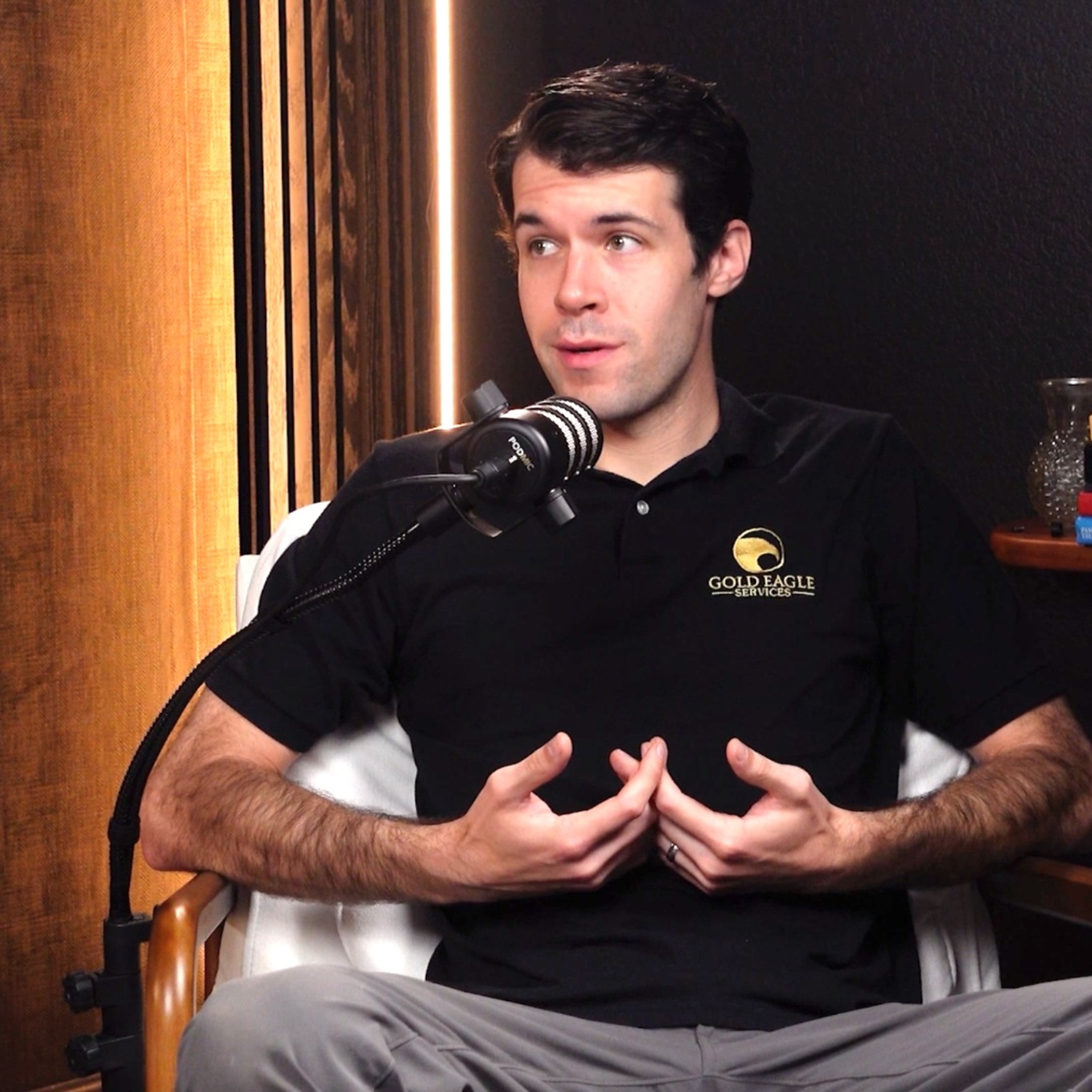
Episode 6 / Jun 13, 2025 / 62 min
How to Talk HVAC, Build Trust, and Improve Air Quality at Home
with Ambrose Francisco
Where to find Ambrose Francisco
HVAC and indoor air quality, Gold Eagle Services
Show notes
In this episode, we sit down with Ambrose Francisco to talk all things HVAC, indoor air quality, and what it means to truly serve homeowners. With years of experience in the field and inside the home, Ambrose shares how curiosity, empathy, and education drive better outcomes - for both customers and companies.
We dig into the realities of home consultations and why real trust is built through conversation, not persuasion. From diagnosing comfort issues to designing systems that last, Ambrose offers a grounded perspective on what doing the job right actually looks like.
Whether you're in the trades or a homeowner looking to better understand your home’s HVAC and air quality, this episode is packed with practical insights - covering everything from whole-home dehumidifiers to HEPA-grade filtration and beyond.
Key moments
- Meet Ambrose Francisco of Gold Eagle
- Learning sheet metal from a master mechanic
- Why new systems depend on good design
- Austin's growing humidity challenge
- What drives high humidity inside a home
- Why buyers need a real HVAC inspection
- Dehumidifiers, filtration and new air quality tools
- Off gassing and chemicals in new homes
- Tracking your home's humidity data
The mailing list
Get the next conversation in your inbox.
One short email when a new episode drops, plus practical tips on healthy homes and building things that last. No spam.
Transcript
All right. This is the science of building your nest podcast. I am Keating Kuhn with Gold Eagle Services and I've got Ambrose Francisco also from Gold Eagle Services. Happy to have you on to talk about the world of HVAC and all the things that you dive into on a daily basis in terms of the customers that we serve and just your knowledge and skillset and why you're here. Yeah. I've had about nine years in this industry. um started in northeast doing a lot of sheet metal duck work up there and really learning from the ground up in design and you know proper system design i was very lucky to work with a small
family business that had many many years of experience in the sheet metal union um father and son deal where The father had been his whole life in the sheet metal union just doing the hard work and learning things. He was a grand master sheet metal mechanic and I was able to work under him and learn from him directly. So I started in a great place as far as system design and how to give these systems the best environment to survive. you know when it when it comes to the sheet metal duct work sealing all the cracks before you're installing it all the seams that
was imperative to just pass inspections because code is a little bit more strict up north inspectors are more particular about what they're looking for so we had to rise to a higher standard just to just to meet that bare minimum but They really Implanted the importance of doing things right from the from the start for me. Yeah, and then when we talk about, you know systems supposing Supposedly being different than the old systems of the past, right? They don't like they don't run like they used to a lot of that goes into the design Yeah. Yeah. I mean these new systems there Not as robust as they used to be they can't
handle as much Improper design so to speak if you have really restrictive airflow my system is going to struggle a lot more and If we just replace that box with a new box It may not work the way the old system worked So it's really important to look at all the factors in the house to see what what may Become a problem in the future Um, after an install. Yeah. And, uh, you took at least a lot of the, um, the culture from that company of how they did things when you came to Austin, but now you're in a completely different environment. You're doing things in Massachusetts, more mini splits in Massachusetts, uh, for the older homes that are there. But now
you're dealing with a much more humid climate, a much more hot climate. Um, and you know, more of a cooling climate versus needing the heat in Massachusetts. Yeah. Yeah, I mean it's a different challenge here. A lot of people just are still running window units up north, so air conditioning isn't required where I grew up, but many splits are a great solution for homes that are older and don't have any infrastructure for traditional air conditioning. just running line sets to an indoor unit can sometimes be easier than running ductwork. But yeah, we focused more on heating
because that's where most of the need was, but the fundamentals were the same. If we're doing a forced air system, we need that ductwork to be able to accommodate air conditioning regardless for installing ductwork or designing it based on air conditioning. Heating is easy. Heating is a lot less strict as far as design. For air conditioning, you need more airflow. So we really had to really design it the same way we would design it anywhere in the country. It doesn't really matter. Air conditioning is a requirement. Definitely. When you're doing a new build, especially. Definitely. Coming here to Austin, it was eye
-opening. with the different challenges that I was faced with, with modern construction, humidity issues. There's a lot of humidity in Austin. People think that Houston is a lot more humid than Austin, but it is still very humid here, and it's becoming more humid over time. Yeah, a lot of people when they come from California and New York, they think that Texas is just a dry climate except for Houston, where at least since I've started in this industry in 2017, Austin has changed dramatically in terms of not only on the humidity side, but then also our winters have gotten more extreme as well. So we've had some pretty cold spells that really
go into the January and February time periods where the heating is now very necessary where it might not have been in the past. yeah exactly yeah the the design parameters for like how we design an air conditioning system has changed in the past few years since i came to austin the design standard for write soft the the manual j software that we use um they've now put in a little extra parameter for the mean extreme 104 degrees uh which is an extreme designing for 104 degrees may make a system oversize most of the time but it's just an interesting point
that they put that parameter in the program because they recognize that the climate is changing and there's more heat to deal with and that goes along with humidity as well. Well, and you talk about building for that extreme of 104 degrees, but as we sit here today in beginning of June, we still haven't hit the extreme summer temperatures yet. And so a lot of the times when we're having this conversation with clients about the existing system that they have, It could have been built for that extreme 104 degree temperatures, but now they are running that system for two or three months before it gets to 104 degrees. And now it's 80 % humidity that we're dealing with instead
of really the heat. And so what are some of the things that you've seen in homes that contribute to that high humidity inside of a home? many different factors. So, you know, looking at the whole home is important, but starting in the fundamentals is where I start. You know, I look at the duck system, I look at the system itself. What size is it? Is it appropriately sized for the house to begin with? And then I look at the duck work and say, okay, is this enough to accommodate the size of this system that we have in this house? a lot of times I find that the duct work
is not enough to accommodate whether it's an undersized return or it's undersized supply where the supply duct work that's going throughout your house is not large enough there's not enough area to actually accommodate that airflow and that can cause the system to sweat it can cause high energy bills they can cause high humidity so you know that's that's just scratching the surface like that's just the fundamentals but there's there's a whole host of other things you know building related things also that uh can cause high humidity so we we have to be creative we have to be curious to look further and uh kind of investigate the true cause of these problems.
And we have to be able to go to classes that aren't just HVAC classes. Now we really start to dive into the building science world and what to do in a house that has spray foam versus traditional insulation, what to do in a 1900s versus a 1950s versus a 2000 home. Really, I don't know if you you realized and I certainly didn't when I got into this profession But we are more than HVAC guys at this point. We really do have to be you know, maybe not general contractors is the right word but at least be super knowledgeable about how a building works with the HVAC system and then at the end of the day how the homeowner is going to use that HVAC system or what they're going to keep the temperature at because that's going to have a big influence on you know, how the system is designed inside of that home as well Yeah, I mean just if you just look at like
new construction and some of these high performance builds that we're now going back to and looking at like it's a it's a challenge because people are using building materials that very few builders use or it is something that the homeowners done themselves you know there's there's different factors like that I was dealing with this home yesterday that they have a very high performance builds and The design firm is a very good design firm. They they did a great job in What they do is as far as the the drawings and the plans
But maybe the execution on the builder side or even just the contractor that the builder hires is Not rising to the level that the design firm was hoping for so you know the execution is important on on the contractor side just as much as design but yeah I mean dealing with these new home problems is sometimes more challenging than old home problems old home problems are more predictable you can you can decipher what's going on with an older system older house a lot easier because it's it's typically lack of insulation You know leaky windows leaky ductwork System may not be the
right size. So the the fundamentals really work really well for the Older homes that'll get us in the right place pretty quickly with these newer builds At this point with this house like I'm like I need the plants. I need to see what was the original Design and what were they trying to do? because we need to start from the beginning again. I need to look at the fundamentals and see how are they designing this? What did they intend to do? How can I make it better without completely redoing the whole system? Where in the process did it go wrong? Yeah, exactly. Yeah, when we start to look at some of these older
houses, I mean, you know, you, you especially have created a method for yourself or a process for yourself to go with the tried and true, um, you know, issues, right? You're, you're seeing spotting around the, the grills or buckets that are caked on with growth. Um, you see, you know, a very short supply plenum with a five ton system, right? Like there, there are things that right off the bat, you can find very quickly because we've just seen it so many times, but on these new builds, people get creative with HVAC, which in theory is good. But at the end of the day, it comes down to the contractor who's installing it and then the homeowner as well to maintain it. And from an education standpoint, the homeowner is buying this high performance house because usually a high performance house from the HVAC side comes with the features of very nice countertops and the different things that people are buying
houses for that aren't just HVAC related. And so there's no education necessarily on their end that, hey, you've got this very high performance HVAC system and it has to have a different maintenance schedule than maybe what you're used to. yeah the the maintenance in this house that i'm talking about like the the customer had no idea of the filters that they had to change um they had filters in their ceiling the ceiling filter grills but they also had a main filter and they never even knew about it um so you know double filtering a system will restrict airflow will affect many things in that system as far as performance but um the education aspect on maintenance and just how their system works is super important, but
the contractors of the builders that are handing these properties off to people, that education doesn't really happen or maybe it's just forgotten or not written down. It's definitely a thing that we have to really focus on education. kind of first and foremost because that's that's gonna decide that system's life that's gonna decide the quality of your air but that homeowner does have to take some responsibility for it because it's their home we can come in and tell them what they need to do we can come in and do maintenance but they They do need to change filters. They
do need to keep in mind that they at least need to get us out there to look at it. If we're not there, we can't help. Yeah, and I think that's where, you know, the buyer's inspection from a real estate perspective, you know, there's the home inspector, but then the HVAC in theory is the most important system in your house. It's the most expensive most of the time, unless you have a pool, but just to get an idea of what's actually going on behind the scenes. And I'm not just talking about a, you know, cursory, hey, let's make sure that the HVAC is working fine. Like let's actually look at the... HVAC system, the ductwork, the insulation, like there's a whole system involved around the HVAC system specifically that a homeowner at least needs to be aware of, of making sure that they have, you know, money allotted for certain expenses
that may be coming down the line in the five to 10 years when they're inside the home. And so, you know, you especially, I think, you know, part of your process that isn't trained that maybe Some people that are in your same shoes don't have is you you care a lot? Not only about the relationship with the customer, but just the curiosity aspect inside of a home I think is you know, I I view that as just caring and so when you go into a home and your curiosity gets the best of you like you're able to go through a lot of things on a very uh fine tooth comb basis to be able to uncover the issues that a homeowner might be having that you know out of the three four five people that they may have had looking at this issue you're usually the
one that finds it yeah i mean i think it's also just something that i enjoy too like i'm i'm curious by nature and i i have a kind of a Interest in science and how things work. I've been that way my whole life, but Yeah, I look at it as a challenge and when when I see a home I'm like, okay, what's what's wrong here? And when I see like a little Drip of water. I'm like, why is that drip of water there? What where did this come from? Why is it happening? you know if I find oil around a little connection I'm like why why is there oil here oil is supposed to be in the system not outside of the system but it takes that extra curiosity but you know you
got to want to find those issues and it is very important you know this is we're talking about mechanics in your home you know the the inner workings of your home that make you make you comfortable to make it habitable that are you know more more expensive items to fix or replace so a homeowner doesn't really want to spend a lot of money right when they buy a house typically some people plan on remodels but they don't plan on a whole hvac redo so yeah looking at the system In a way that you know what I want to buy this
house like is this is this something that I? Would want to take on myself like if I if I was in their shoes So you know looking for the challenges that might come up soon, but also challenges that might come up later I've I've done realty inspections where I really knew what this customer was looking for some people are really concerned about indoor air quality in their home and they don't want to buy a house that has air quality issues or could have air quality issues in the future or even noise like like the customer mind was very sensitive to their HVAC system coming on at night and waking them up and also really
hypersensitive to indoor quality issues I was aware of that. I knew that that was that was a really the primary reason for them looking for a new house so I was looking for all those issues that might come up and you know, we found one house that Everything was perfect. The the primary inspector for the house said you're good. You know, there's just little tiny things here and there but I did my inspection and found that the HVAC system was a it was a two-story home with a two-zone system uh set up and when the system turned on it was very very noisy upstairs
because the airflow is struggling to get through the ductwork the ductwork is a little small so when that second zone upstairs turns on you hear this rush of air and I know that's going to be an issue for this client so I let her know I'm like yep this is really noisy maybe you want to come and check it out listen to it for yourself but I can already tell that this may become an issue for you because this is something you're concerned about but that's just scratching the surface like there's not indoor quality issues right now in this home but with that improper airflow with that undersized ductwork that can create indoor air quality issues so yeah and
you've just seen it so many times right and and the the byproduct of an improperly sized system or uh improper size duct work or leaky duct work is health problems at least um you know i i i don't want to be I don't want to be too forthcoming with like, hey, you know, every system is going to, you know, every house is going to cause indoor quality issues and, you know, your health is going to be affected by it. But unfortunately we just see it so many times, right? It's confirmation bias because these are the people that reach out to us. They have... very big issues inside of their home. And at the end of the day, their health is being affected by it or their kids' health is being affected by it. And so part of the curiosity is gaining the trust of that customer to go and find the issues that they're dealing
with or asking the right questions. Because for this customer specifically, if you maybe didn't ask why she was looking for a new house or what issue she was having with her previous house that she would like you to take a look at on the new one, you might not have uncovered those issues. And so at the end of the day, we're having to to go through many different avenues of the customer expectation and making sure that they're happy and then making sure that the system itself is going to last for a long time because it is a very expensive piece of equipment. And then at the end of the day, making sure that the home is healthy for the inhabitants that live in there. Yeah, everyone has different goals and everyone has a different status of their own health. Some
people They are not very sensitive and they can handle more contaminants within the home and they're not gonna be affected by it So they're not concerned about these things at all. So they're they're just looking for something that works Comfort comfort. Yeah, but at the same time Some of these problems some of these indoor air quality problems can become a bigger issue down the road they can cause property damage so you know it's we have to look out for the customer for things that they might not even think of then bring that to their attention whether they want to fix it or not that's entirely up to them but it is our job to look at that that situation
and address any issues that that might be safety related that might be property damage related We have a lot of responsibility to withhold that information and give that over to the customer. But yeah, we deal with a lot of customers that have high sensitivity to different kind of contaminants in the home. I think people come to us when they have issues. So we see the worst typically. I probably have this perception that everything is messed up because I see it so much But I see the worst of situations and and I have to figure
out a solution for that very often So, you know, I kind of expect to see these issues in every home, but it doesn't have to be every home Sometimes you get lucky with a system sometimes the problem isn't as bad as you would think sometimes it's it's just some minor tweaks that we can make to uh a plenum replacing the plenum or or making a different size plenum yeah adjusting the airflow or adding a return somewhere yeah sometimes it can be very simple yeah or or just maintenance sometimes the system hasn't been maintained at all for years and it just needs a little love it just needs a little we'll touch from our service guys. So there's a lot of things we can do to
help. Yeah, a lot of a lot of the times, you know, when you go out to home, it's not usually for, hey, my air conditioning just broke and now I need a new one. Right. I think, you know, for the most part, the calls that we get are, you know, I know I have an issue with my health and I'm starting to see some signs from my doctor worker from my HVAC system. I went up into the attic and saw some things around my unit. You know, things of that nature that usually if a homeowner is seeing it, we're going to be able to uncover a lot more behind the scenes just because they're only looking at it from either the ground level or from the attic. And so they're not actually looking inside of the system. They're not looking inside of the duct work. And that's really where I would say we set ourselves apart from other companies as well, because we're able to go through these systems and really find where
the issue started from and then be able to create almost a protocol of how to fix it. Yeah. Yeah. I mean, just going back to the realty inspection, you know, a typical inspector, a home inspector is not well, they're not even qualified to look in an HVAC system. They can't Open it up and look inside. They can't take a panel off of the unit Just licensing wise so they can see the age and they can see what the temperature differential is. Is it is it blowing cold air? Yeah, and that's that's just the bare minimum like there's there's a lot we can tell by just opening a panel and looking inside and taking pictures and What we
find, you know, we We can give a lot of advice and Recommendations based on just what we see the visual can tell us a lot about what's going on But if you can't see it, you don't know what's going on. So It's a it's a simple thing looking inside the box But you need the right right professional to do that as well. That's right Yeah and not only then looking inside the box but then when you do find issues what to do afterward and I think that's where you know your skill set especially I think just you know out of the hundreds of homes that you've seen you know in Austin specifically. And then once you jumped aboard Gold Eagle and
really started to get more of these customers that were having massive issues and really having to spend three, four, five hours with a customer to uncover the issues that not only they're having maybe health wise, but, you know, how they're living in that environment. And, and at the end of the day, what they want to do inside their home. I know you've, you've uncovered a certain amount of things in some homes where a homeowner just doesn't even want to deal with it and they're going to sell their house because of it. And, you know, really that stems from the health issues that they might be having. And so, you know, you've really been able to cultivate the, again, I'll go back to you caring because it's not just about the curiosity inside the home, but then it's curious on how to help that homeowner as well. Because the stories that we've heard certainly, you know, there's certain scenarios that we've
come across where we're getting hugs at the end of a job that we do. And I think that's for an HVAC profession, like that's probably not something that everyone can say has happened to them. Yeah, we've had some people that have had health issues their whole lives and the air quality aspect has made it that much worse and they have looked all over the internet doing their own research to try to find different medications, different things that they can do to help their family live better in their home. And then they finally find us they find that okay, maybe it's something related to air quality so let's look for a company that focuses on air quality and they find us
and they Discover that there are some solutions and we can provide different different solutions for different folks and Yeah, we've we've had people that we've really actually Improved their health and they've they've noticed the difference day one Which feels really good that that is confirming in what we do We don't always get that confirmation a lot of times in air conditioning like people expected to cool their house and if it doesn't then We suck and then if it does then well, you did your job. That was it. So
That's what they paid us for. It's kind of like a thankless industry sometimes, but when we are able to solve some of these higher level issues, that gives us that much more wind behind our sails. We're doing the right thing. We need to keep on for that. that customer so we're improving their situation. Yeah and that customer you know just many of them have become customers for life and almost friends because of the you know level of conversation that we've been able to get with them just you know hours and hours of conversation and there's many people on our team that you know are kind of facilitating in that conversation right. Either calling into the office or just when they reach out to one person there's long
conversations that we've had with many customers I know you can probably pull a lot from memory. And I think it is just, you know, the, the area of expertise that we're in when we deal with, uh, people that have mold toxicity in their body and they can't really live in their house anymore. Like that's devastating, especially for someone who might've, you know, lived in this house for either three years and it was their dream house or 20 years and it was their dream house. Um, you know, to, to. be kicked out of your home or to go somewhere for two weeks and feel better and then go back home and just knowing that you're, you're not going to feel good. It's devastating for a homeowner. And so, you know, someone, someone like you that can, uh, can enable them to feel comfortable inside of their home again, I think is so powerful. Um, and you're right, you know,
when we do hear these stories, I think it does give wind in our sails that we are going in the right direction and really, you know, fine tuning our new craft of, uh, you know, finding these specific. and helping people at the end of the day. Talk to me about the new products of HVAC that have come across our, maybe not our radar specifically, but just in general of the things that we're having to look at in Austin. Dehumidifiers would be the biggest one, but we've started to do even HEPA filtration systems. All of our systems come with like an Aprilaire five inch filter rack. So now we have at least an upgraded level of filtration compared to the 99%. of systems but you've started to be able to blend a lot of the alternative HVAC equipment and be able
to you know help homeowners inside of their home not only stay comfortable but breathe better. Yeah I mean there there is a whole world of indoor quality products and I've probably touched all of them in my career but There are definitely fundamentals of air quality, which are filtration, purification, and proper sealing of ductwork. But the humidity control in your home is super important. A dehumidifier is really your last line of defense in protecting yourself against
humidity. An air conditioning system can handle the humidity in your house, but it is not designed to handle the humidity in your house. It's targeting the sensible heat in your home, and the latent heat is not what you can see, but it's what you can feel. The humidity in your home makes it feel warmer. No matter what temperature it is, it's always going to feel warmer based on the humidity. humidity can cause a lot of different air quality issues so that that whole home dehumidifier is a way to control the humidity without having an empty a bucket every day and it being integrated
into your HVAC system allows it to be dry air distributing throughout the house not just this one focused area and it also dries out the system so it it can keep the system cleaner because it's not getting like wet and staying wet all the time but that's that's just one aspect i mean filtration is another super important thing particulates in the air again something you can't really see but it's there some people deal with dust they're cleaning up dust on their surfaces once a week and they're fed up with it and they're like I just need a I need a solution to this
like I'm tired of cleaning up all the time yeah and if it's on the ground it's in the air and and if you're not filtering it through your system then your lungs become the filter yeah I mean your lungs are the filter in that sense so um you know a lot of times in in new construction or homes that are newer you see a lot of sheetrock dust because they they sanded down the walls that sheetrock dust got in the air and got everywhere and i find a lot of sheetrock dust sitting at the top of the ac grill and every time that air rushes down into the house and hits that grill it kicks up a little bit more of that sheetrock dust so um just taking those grills down and
vacuuming out is uh is a solution. Just removing the dust from the air is a very important aspect. And you were talking about how HPAC systems can remove a lot of humidity inside of a home, but they're not designed to. Most of the time when we're sizing a system properly, that is for the extreme temperatures. Unfortunately in Austin, it's really not the extreme temperatures that affect the um you know biological growth inside of a home it's it's usually the humidity uh because you know when we have an 80 85 percent day humid outside and it's only 80 degrees or 85 degrees
like your AC system's not even running because once it gets down to 74 degrees or 72 degrees on the thermostat it's shut off even if the the humidity inside the house is making it feel like it's 78 degrees and so you can crank that thermostat down further to 68 or 65 degrees just to feel that cold air on you but now that system is just passing really cold damp air through the system and that almost can be worse. And so when you do that year after year now you really have buckets that are starting to accumulate moisture in them and you know then we start to see some of the issues that you see on a daily basis. We're talking about air quality and the different aspects and different products that can help with air quality.
You know I'm always learning Like I've been doing this for nine years. I'm always learning about different aspects different products You know humidity control has been always top of mind because that is what can promote biological growth but You know, there's other contaminants within the home other than you know, some kind of growth. There's there's chemicals and you get new furniture that furniture is off gassing if you get new cabinetry that cabinetry is gonna off gas um yeah paint carpet new wood floors everything it's a new new home smell new car smell yeah
so those contaminants can sometimes be harmful to you and you don't even know it um things like formaldehyde that that's coming from the glue and the the cabinetry flooring insulation you name it but dealing with these different contaminants is kind of different depending on what it is too and you know I've been doing research recently about that specific topic and you know activated carbon can help absorb VOCs or chemicals out of the air but The formaldehyde specifically is it is a tricky one to deal with so there are
some products that I'm looking at and Looking at how we can implement into an HVAC system Because this is a challenge that I feel like we're gonna see more in the future especially new construction where You know, maybe building materials are not selected based on what the homeowner wants It's more selected based on what the builder has or is is willing to buy You can select building products that don't have as much chemicals or no chemicals But you have to ask for that The builder is gonna put in what they're used to putting in there They're not gonna just they're not gonna ask you. What do you want to put in
your house as far as building materials? um but yeah or even the handyman that you hire to you know paint your walls or uh the gc who's doing a remodel for you yeah i mean uh you know specifically comes to mind of you know low or no voc paint specifically um you know i know when most people paint a house like there's a smell that fills up that entire environment and you know depending on your immune system like you know most of us can handle walking into a house and smelling it you might get a slight headache but at the end of the day it's poison yeah Yeah, and it's it's your home. That's your your sanctuary and It's your nest. It's your nest. So you're spending most of your time, you know sleeping too in your bedroom and So you're breathing in all this toxin
from the air and You got to deal with it somehow whether it's your lungs or through some other device, but totally Yeah, and there's many products that manufacturers make that... You know, we now have to figure out how to manufacture that inside of a home. Um, and I think that's where, you know, your due diligence comes in very clutch as well for the installation team, because you have to see it for yourself on if we can even make this work before the installers go out there and actually make it work. Right. Um, because there's a lot of, you know, and probably coming from Massachusetts helped you see things in a different perspective when it's, you know, a house with no attic. How do we, how do we get. a piece of equipment in a place that we need it and make sure that it's going to one fit and
to be serviceable for that homeowner in the future or for whatever company is going out there after us that, you know, is going to have to service this equipment and make sure that it lasts for the lifetime that it's expected to last. Yeah, like a dehumidifier can be really tricky to fit into a space. You know, if you don't have an attic, you don't have an extra closet. You don't have a garage. There are very little options after that as far as where we can put a dehumidifier Yeah, the ultra MD 33, which is the ultra product that The Santa Fe product that goes into the the wall as a dehumidifier, right? That's a it's a very creative solution for some of these some of these houses that really don't have space for a standard dehumidifier Yeah, you got to
be creative and you've got to be Considerate of what the homeowner wants to like We can't just build a box in the middle of your living room and say okay this has to be here because this is important for your air quality. We have to be creative to find different products or different creative solutions to get this in their home without affecting the aesthetics too much. We may need to remove sheetrock every once in a while to get things you know duct work into the walls or electrical or whatever we need. but hopefully we're not completely changing the structure of the house. We're trying to use the existing structure, be considerate of the homeowner,
and also improve their situation in the home. Yeah, HVAC guys and architects are usually butting heads. HVAC guys and interior designers are usually butting heads. I've always said HVAC isn't sexy, but neither is sweating inside your house. Now it's really gotten to the health effects that come from the previous HVAC guy that may have messed stuff up or the previous design that is improper for a home. Those things seriously impact. the the person that's living there and it affects their resale value as well if if that next buyer does their due diligence um and really sees things that need to be addressed you know it can be expensive and you know the next homeowner might not want to deal with those issues yeah there's there's some homeowners out there that really
do care about their air quality and they've dealt with these problems before um i have a client that She had a house and she she had a very major mold problem. She had to completely redo the house spend a boatload of money and Still wasn't able to live in that house had to move and then she had the same exact problem happen again at her second house so she ended up doing a custom build home high-performance build and really was trying to do things right but is now still having challenges so I think you know these customers
are are top of mind for us because they understand the importance of what we do and they understand like what it takes But it does it does take us to do the right thing as well. We need to rise that occasion and do quality work to Not have this happen again But I think people are waking up to the importance of what we do and doing things right Especially for someone that's dealt with it multiple times They almost become our best customers because the the questions that they're asking Us are some of the questions that
make us better, right? It's the ones that, you know, if we don't know, we're going to find that out one, one way or another. Um, and it really, you know, helps us as we continue our career and our path and the journey down this road of, uh, doing things different, because a lot of the times that we don't have a guidebook, we can, we can. pull and take from a lot of the, um, you know, people who have come before us and have taught us the things that we now know. But, um, you know, when we're going into, you know, a house on an everyday basis, like there, there are things that we're having to draw from from 10 years ago that, man, that, that was the piece of information that I needed to solve this problem inside of the home. But, uh, for, for the homeowners that have dealt with, you know, mold toxicity, especially, or, uh, um, a water event inside of their home that, you know, they've spent tens of thousands of dollars to try to
get this solved and at the end of the day, their health is being impacted. They're having to take that next step forward internally to then go do their due diligence to make sure that they're educated enough so that when they hire a contractor, they can steer them in the right direction just in case the contractor doesn't know what they're doing. And so we've had a lot of those customers that, man, they've really pushed us to be better because now we're learning more and more things from the customer that we're tapping into the resources that they've. Found for themselves because of the issues that they were having inside of their home Yeah, the challenges that homeowners face and then and then we in turn face are sometimes new problems We've we've learned from other people in our industry through You know tricks of the
trade or just experience I've learned from people that are much older than myself that have been doing it for You know decades and the the challenges that those guys faced Are different than the challenges I'm facing today Building science is changing Buildings have become a lot more tight even just in the last ten years So, you know the the parameters are getting more strict We we have to kind of look at all these different aspects of the building to solve these issues. But the homeowner is becoming more educated on
that and they're doing their own research and we've found that they've been very helpful in giving us the information we need to solve their problem. A homeowner knows their house better than anyone. how your HVAC system runs you kind of know how long it runs how it feels in the house at different times of the year when we're going into a house we're just getting a snapshot we might be there for an hour maybe three hours just just to fix something and or just inspect something but we're not really seeing how that house operates in the fall or the spring every
time We're there on a 90 degree day and you know, it's 50 % 60 % humidity outside like we're only seeing a snapshot of what they're dealing with on a yearly basis. Absolutely. Yeah. So, you know, just data on how that system operates is super important. I tell customers to get one of those little basic weather stations for their house. Keep track of what your humidity is in the house because Lot of times in the fall and the spring your humidity will spike up because Your system is not cooling or heating you're not conditioning there at all So your house is just gonna rise in humidity It's just gonna retain humidity unless you have a new way of dealing
with that like a dehumidifier But we won't know that unless we're there on the day that it just has this so happens to be spiking up yeah that could be an anomaly in theory uh the the ecobee thermostat if you sign in on the computer program on your laptop you can see historical data that's that's one thing i i ask people to do when they have an ecobee thermostat is like hey sign in on your computer let's let's take a look further and see what happened for the whole year because what i'm seeing today that may not be the whole picture Yeah, and you want to see that home between 45 and 55 % humidity almost year round. That
really is the sweet spot that you're not going to have these biological growth issues. Yeah. And I've seen some historical data before where it was 45, 50 % humidity during the summer and the winter, but in the fall and the spring it would spike up to 70%. And no one ever knew that like until we asked the question is, Hey, can we just look a little bit further? Can we do a little bit more investigating? Let's, let's look at the data and the data showed that, yeah, their humidity is spiking. Um, so it takes an extra, extra step to look further and investigate. Definitely. Yeah. And then when you talk about the new homes becoming tighter, you know, that,
that really affects the size of HVAC system that's going into the house, but it still doesn't deal with the humidity issue. Sometimes it can exacerbate it, especially when you get a very low ACH house that has spray foam, you're trapping that moisture even tighter. And so, yes, your system's properly sized based upon the parameters that this house is in, but it has no way of dealing with the humidity. And really, I think this is where we've seen exacerbated issues with spray foamed houses because that AC system is just circulating 75, 80 % humid air throughout the house all day long. And you add a fresh air intake to that, and then you add the fan being on for 15 minutes every hour. You really start to uncover these issues
that are way more widespread in the new tight houses versus the 1900s or 1950s houses that we've seen too. There's different issues with those houses, but they aren't as trapped. You don't have all of the formaldehyde from the new construction being trapped in the house. of all the humidity being trapped. I mean, it's like a science experiment every time you walk into one of these houses. Yeah. I think, I think the, the builders are following the code requirements. You know, the, the fresh air requirement for new construction has risen quite a bit recently. So, you know, they're, they're having fresh air introduced into the home. Uh, But that's also bringing humidity into the home and when we're
bringing more fresh air That comes with additional humidity as well, but that additional humidity is not being dealt with You're banking on your hvac system to deal with that you're hoping that that'll help right or you're hoping that'll deal with the issue But typically it does not But also homeowners are not educated on how to operate their home I've talked to talk to people all the time about exhaust fans in their bathroom You know exhaust fans are Really for removing humidity. That's their job They're not just for smells. They're there for when you take a hot steamy shower You get that humidity out of the house before it gets throughout the house But
people sometimes don't run their exhaust fan it's too noisy or they don't run it long enough or you just forget I mean maybe people know that it's important but they just don't think of it so you know there's there's some simple things you can do to make it that easier for you may require electrician to get different kind of switch on your fan whether it's a humidity sensor or a timer or an occupancy sensor there's different things that are better for different folks like some people with like to have it just not even not even have to think about it um but yeah i mean that's that's a really important aspect that's often forgotten is is exhausts um but
yeah i mean when you're when you're introducing additional humidity into the home through fresh air uh dehumidifier is kind of the only solution when when code requires us to introduce a lot more fresh air into the home and we have no choice but to satisfy that code requirement we have no choice but to add a dehumidifier like that's that is the only way to deal with that additional humidity so we're kind of cornered into that solution for that specific situation because of the building code and how it's changed Yeah. And somehow we need to know all of this when
we walk into any random house that we might walk into. Yeah. Great, great conversation. Really just appreciate so many things about you, but just how deep you can go in some of these conversations. It's quite incredible. Anything top of mind that we might've missed? I think it's just, for me, this is... exploration of the science of HVAC in the physics I just enjoy the challenges that I face every day and I Look at it in a positive way. I think some people look at it like oh, here's another problem and maybe sometimes I look at it that way, but I Enjoy the challenges
that I face and I think that helps Coming coming to challenges with a little bit of optimism and positivity like we can fix this This this can be better You don't have to live in the house this way But that that is uh, I think a difference that I bring to the table is like This is possible You know, it may be difficult we may have to make some changes or um might need to do a little bit of sheetrock repair but it's it's nothing huge we don't need to rebuild the whole house but that's that's something I've changed in in
even just the past few years of how I look at a house I think sometimes I would I would look at some of these larger homes and you know some of these homes have five six systems and it can be incredibly overwhelming when you have a lot of issues and it's just a huge scale. If it's alarming to you or gives you anxiety seeing so many issues, imagine that homeowner with five or six systems that have that many issues. Yeah, but it's just boiling it down to the little pieces of data, taking all the data down first and foremost, just gathering all the existing infrastructure
data and then compiling that and, you know, crunching the numbers, so to speak, to see kind of, okay, what's going on? Where is the problem the worst and what can we change to make the most impact? There is the fix it today issue where, you know, there's an issue like my AC doesn't work right now. Well. let's get it working let's get it cooling that's that's first and foremost that's something that we usually can fix today but there are other things that can cause you know long-term issues underlying issues that they can become more of a problem over time and you don't have to fix it today but it's important to know
about it so that you can work towards a solution and and get to a better place before it becomes a massive issue hopefully you know we're trying to protect your home as much as we can and you know if we can slow things down or prevent things from causing water damage that's that's first and foremost in our brain like we we are trying to protect your home as well Yeah, and water damage doesn't have to come from, you know, a kitchen sink that overflowed or a water heater that exploded. It can come from high humidity because of the HVAC system, which is something that, you know, we've seen many times and unfortunately it's not a well-known occurrence. And so, you
know, most companies aren't looking out for it and most homeowners certainly aren't looking out for it. So, yeah, I think, you know, protecting the home is the biggest thing for many reasons. You know, one, the amount of money that people are putting into their home on a yearly basis, like that is the net. that they have for themselves and the HVAC system is just a huge importance to make sure that the longevity of the home is intact. Yeah. Yeah. I mean, we're when I look at a AC system and I see that they just have like a float switch on their drain pan and they don't have a float switch on their coil. I just shake my head. I'm just like Why would you want water in your emergency drain pan to begin with right like what why would you want water to be?
dripping out of your system where it shouldn't be to hopefully be caught by The emergency drain pan that they hopefully set up right to begin with I filled that pan up with 20 gallons of water two inches from your from your drywall Yeah, that's it's a little scary if that's your only line of defense um so you know i look at a lot of little things too um you know things things like safety switches it's not an expensive part it's not expensive to put in but it can save you thousands and thousands of dollars of water damage so and no one likes dealing with drywall yeah no drywall is not fun to replace and it's it's uh it's a dirty thing to uh create
all this dust in your house you know sanding sheetrock Um, people have dealt with that many times and they don't want to deal with it again. So, um, people understand the importance of that usually. Yeah. And I think that, you know, it's important to highlight some of the, the, the contractors that we've worked with when it's outside of our area of expertise or things that we don't do as a company, the, uh, the people that we've acquired over the years, the relationships that we've made of people that care about the home, care about homeowners, you know, care about doing quality work, being able to, you know, bring them alongside of us when, when we do some of these expansive jobs where, Hey, we need an extra electrical line to the attic to install a dehumidifier or, you know, Hey, we do need to cut 50 holes inside of your downstairs to,
you know, facilitate some new duct work being installed. We have the right contractor that's going to, you know, set up the plastic sheets and clean up after themselves and do the, do the bang up. job that, you know, the homeowner expects because our name is associated with that job, whether we like it or not. Um, so that's, I think the, the other part of it too, is just being able to tap into the resources that, um, you know, that we trust because at the end of the day, we, we aren't drywall guys, but we need, we need to facilitate drywall guys for the homeowner when we start cutting sheetrock. So yeah. Yeah, I mean I see a lot of homes that have drywall patches on their ceiling and it's very obvious that there was a patch and I'm very happy with the drywall contractor that we work with because
he can make it look like nothing ever happened And that's that's what the homeowner expects when they want that ceiling patched up again, they want it to look like nothing ever happens which is a That's a lot to ask for, I suppose. But at the same time, if I was a homeowner, I would want my house to look normal. I wouldn't want some rough patch on my ceiling. So it's easy to understand how important that is. So that is something I'm really happy with, with the contractors that we work with. But also just their ability to work with a homeowner too. their
ability to communicate. The communication aspect is something that's sometimes hard to find in this contract work in general. I think that's where a lot of relationships with contractors and homeowners go awry is lack of communication. you know, I've been really happy with our drywall contractor and his ability to work with the homeowner to do what they're asking him to do and he's able to tell them what it'll look like afterwards, kind of help them picture what the solution will look like when he's done with his job. But he's
also been able to come up with some creative solutions that make my job easier, too Sometimes I need a little bit more space somewhere sometimes I need a little modification and he is able to facilitate that he understands what I need and he's able to picture that in his head and then Illustrate that for the customer as far as what it will look like afterwards So that they can see the full picture. It's like, okay, this is my problem. This is what I need to do to fix it. And then this is what it's going to look like afterwards. Yeah. Now you and him are working together to try to find a solution for the customer. Yeah. Yeah. Yeah. It makes it easier sometimes to be able to put. put our heads together and,
you know, the conversations that we have of issues that you're seeing in the field. Um, you know, same with some of the, some of the other guys on the team. I mean, I think it, it's a group effort when it comes down to the issues that we're seeing, because, you know, like I said earlier, there's, there's a certain amount of issues that we come across that aren't, they don't have a rule book for it. They don't have a class that we can just go take and find the solution to all the answers when you're dealing with, you know, different houses, different builders, different homeowners. Like we're just, we've got to come up with creative solutions that we know at the end of the day are going to make the home healthier. Whether it takes the creativity or not, some of these projects are more straightforward than others, but at the end of the day, that homeowner is looking at us for our expertise to make their life better. Um, appreciate everything you do and yeah, just the, the knowledge that you have and everything that you're, you're able
to pull, uh, to the forefront when you, when you go to these houses, it's a, it's definitely a special, special trait. So, um, Ambrose, thank you for joining us. Yeah. It was fun talking about it. Absolutely.
This transcript is generated automatically, so names and words may be off.
Keep listening
You may also enjoy
Hosted by Keating Kuhn. This podcast provides general information and is not a substitute for professional advice. Always consult a qualified professional about your own situation, including medical, legal or financial matters.
